Armenia-Azerbaijan Peace Process in 2026: How Could Normalization Reshape the South Caucasus?
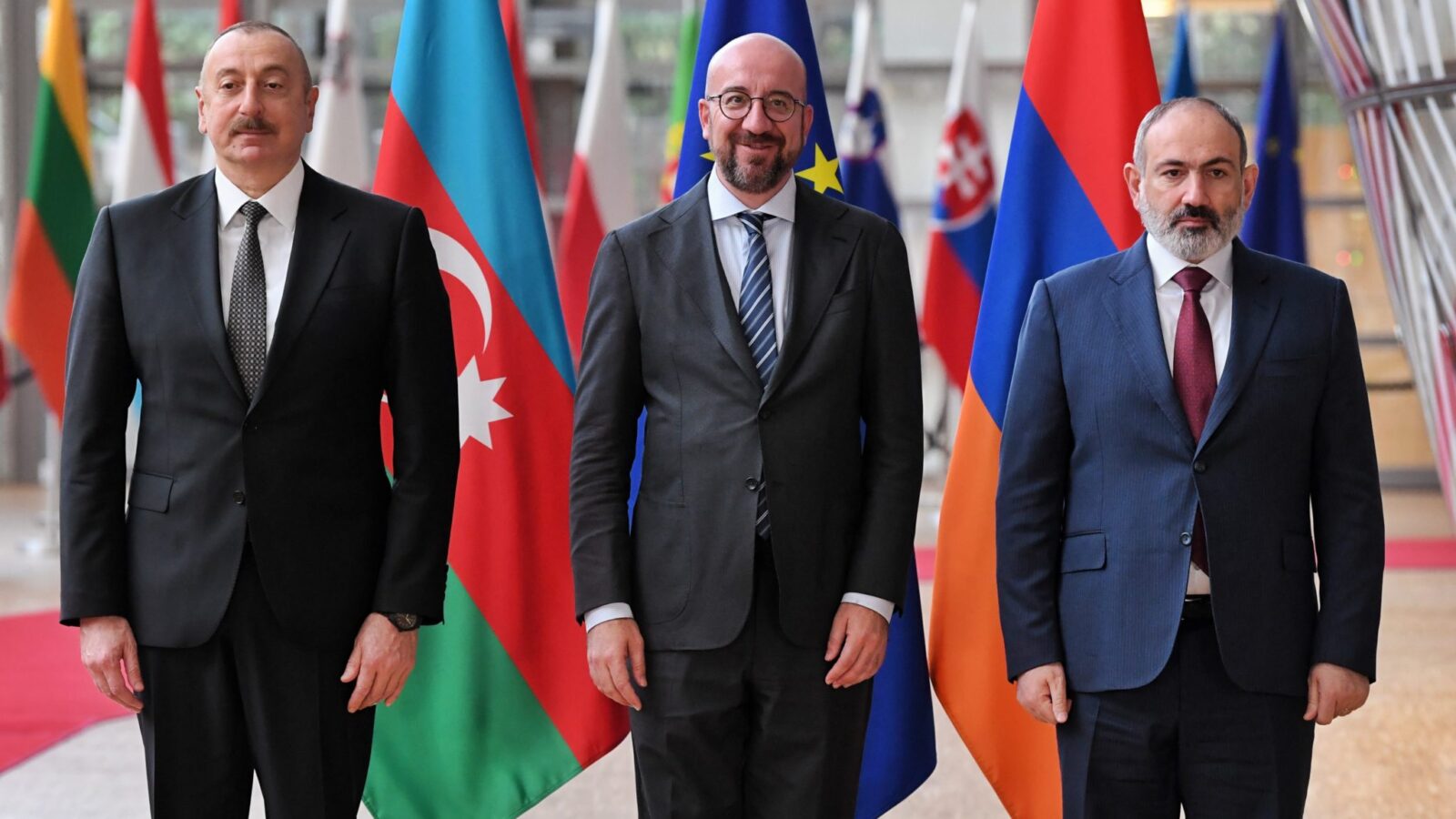
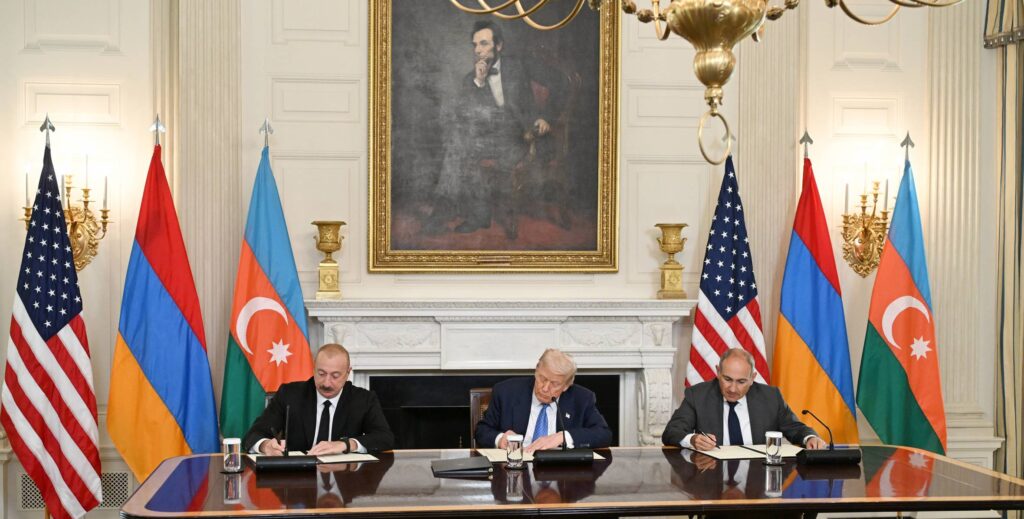
Gaining momentum after the Second Karabakh War, the Armenia-Azerbaijan peace process 2026 has entered a new stage. While the text of the Agreement on Peace and the Establishment of Interstate Relations, agreed upon by the parties, was initialed in Washington on August 8, 2025, the latest leaders’ meeting held in Bishkek, the capital of Kyrgyzstan, on August 31, 2026, demonstrated that the process now extends beyond political negotiations to concrete economic and transportation projects.
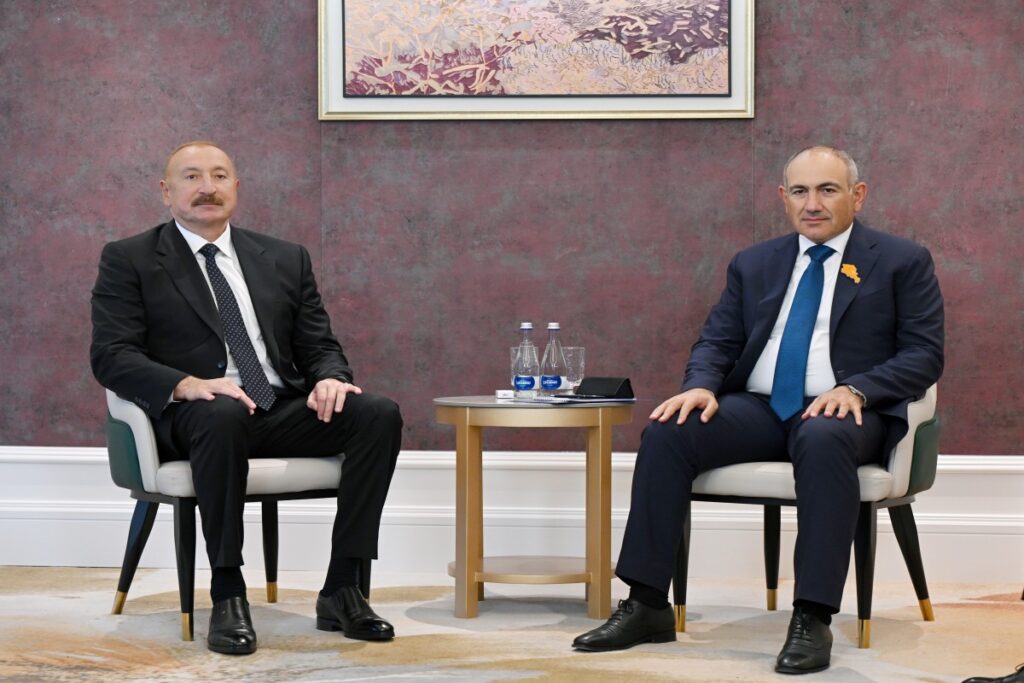
During their meeting on the sidelines of the Shanghai Cooperation Organization (SCO) Summit, Azerbaijani President Ilham Aliyev and Armenian Prime Minister Nikol Pashinyan discussed strengthening lasting peace, normalizing interstate relations, border delimitation, trade, and regional connectivity projects. The meeting is significant in assessing whether the conflict dynamics that have shaped the South Caucasus for decades can give way to a more institutionalized process of normalization.
Table of Contents
What Was Discussed at the August 31 Bishkek Meeting?
At the August 31, 2026 meeting, the parties reaffirmed the importance of the August 8, 2025 Washington Peace Summit and the peace agreement initialed there. However, the most notable aspect of the meeting was the emphasis on how the peace process could translate into day-to-day economic ties rather than remain limited to political declarations.
In the leaders’ joint statement, the export of Azerbaijani petroleum products to Armenia, the transit of grain and other goods from third countries to Armenia via Azerbaijan, and the development of commercial relations between the two countries were highlighted as concrete benefits of peace. Increasing contacts between business representatives and expanding cooperation in the economic, commercial, and energy sectors were also placed on the agenda.
These developments indicate that the peace process is advancing not only through border security arrangements and diplomatic documents but also toward a normalization model designed to foster economic interdependence. These economic steps suggest that normalization within the Armenia-Azerbaijan peace process 2026 is beginning to produce tangible results.
Armenia-Azerbaijan Peace Process 2026 and the Current Status of the Agreement
Although the peace agreement text agreed upon by the parties was initialed in 2025, the process of formally signing the agreement and bringing it into force has not yet been completed. The text stipulates that the two countries recognize each other’s sovereignty, territorial integrity, the inviolability of their international borders, and political independence. The parties also commit to refraining from making any current or future territorial claims against one another.
Another important provision of the agreement envisions the establishment of diplomatic relations between Armenia and Azerbaijan after its entry into force. Border delimitation and demarcation efforts are also expected to continue through the existing state commissions.
However, one of the major political obstacles to the formal signing remains the constitutional debate. The Azerbaijani government argues that references to Karabakh in the 1990 Declaration of Independence, which is cited in the preamble of the Armenian Constitution, could be interpreted as a territorial claim against Azerbaijan and considers addressing this issue necessary before the peace agreement can be signed. The Pashinyan government, meanwhile, has stated during discussions over a new constitution in 2026 that the conflict-oriented logic of the past should not be carried into Armenia’s future constitutional order.
Border Delimitation and the TRIPP Transport Route
In terms of the Armenia-Azerbaijan peace process 2026, border delimitation and regional transport connections remain among the most important elements of lasting normalization.
One of the fundamental legal foundations of the peace process is the 1991 Almaty Declaration. The parties have accepted the principle that the former Soviet inter-republic borders would serve as the international borders of the newly independent states as the main framework for the delimitation process.
While on-the-ground delimitation work was carried out along certain sections of the border in 2024, the state commissions continued their activities in the following years. At the 13th commission meeting held in April 2026, the parties discussed the preparation of delimitation maps, the working methods of expert groups, and technical procedures for formalizing the relevant documents. During the August 31 Bishkek meeting, the leaders once again emphasized the importance of continuing the work of these commissions.
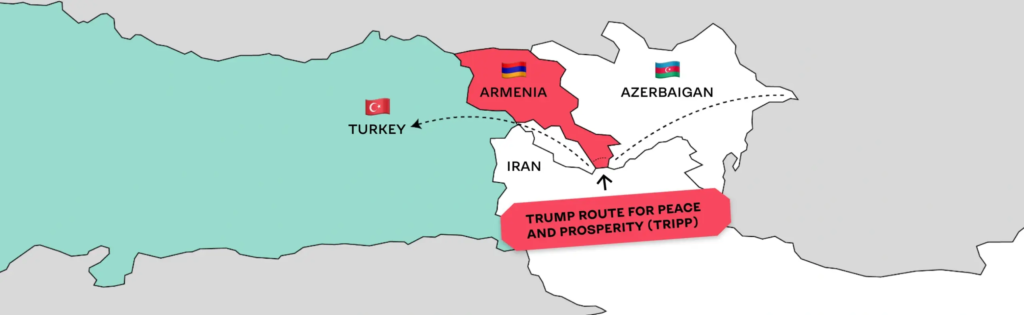
Regarding transport connections, the Trump Route for International Peace and Prosperity (TRIPP) stands at the center of the current diplomatic framework. The project aims to establish a connection between mainland Azerbaijan and the Nakhchivan Autonomous Republic through Armenian territory while also expanding Armenia’s access to regional and international transportation networks. The section of the project located on Armenian territory is expected to operate within the framework of Armenia’s sovereignty, territorial integrity, and jurisdiction.
For this reason, describing the process solely through the concept of the “Zangezur Corridor,” which was widely used in previous years, does not fully reflect the diplomatic framework that has emerged in 2026. Current negotiations focus on developing transport connections in a way that combines mutual economic benefit with the principles of state sovereignty.
Effects of Normalization on South Caucasus Geopolitics
The Armenia-Azerbaijan peace process 2026 could transform not only relations between the two countries but also the broader economic and geopolitical structure of the South Caucasus.
- Strengthening the Middle Corridor: New transport connections between Armenia, Azerbaijan, and Nakhchivan could provide alternative and complementary routes to existing networks linking Central Asia with the Caucasus and Europe via the Caspian Sea. This could increase the region’s transit capacity and geoeconomic significance.
- Türkiye-Armenia Normalization: The normalization process between Ankara and Yerevan is also progressing. In May 2026, Türkiye announced that bureaucratic preparations for launching direct trade between the two countries had been completed and stated that technical work toward opening the shared land border was continuing. Progress in the Armenia-Azerbaijan peace process could provide a more favorable political environment for this process as well. Therefore, the Armenia-Azerbaijan peace process 2026 also holds direct significance for the future of Türkiye-Armenia normalization.
- The Role of External Actors: The diplomatic landscape of the South Caucasus is becoming increasingly diversified. NATO’s role in the international system is also relevant to understanding the broader security framework, particularly in terms of Türkiye’s role in the regional security equation and its relationship with transatlantic security structures. While the Washington process has strengthened the role of the United States, the European Union’s civilian monitoring mission in Armenia (EUMA) is set to continue operating until 2027. The EU also launched a second civilian mission in 2026 to support Armenia’s resilience against hybrid threats. At the same time, Yerevan and Baku reaffirmed during the August 31 meeting their intention to continue normalization through direct bilateral contacts.
Conclusion: Is Lasting Peace Possible?
From the perspective of the Armenia-Azerbaijan peace process 2026, the August 31 Bishkek meeting demonstrates that economic and transport-oriented normalization is increasingly taking place alongside diplomatic engagement. The inclusion of trade, transit transportation, energy relations, border delimitation, and connectivity projects such as TRIPP on the agenda shows that normalization is beginning to produce tangible economic results.
Nevertheless, the formal signing of the peace agreement, the resolution of constitutional disputes, the completion of border delimitation, and the development of workable arrangements for transport projects that respect the sovereign rights of both countries remain crucial.
If these steps are successfully completed, the South Caucasus could gradually transform from a region long associated with conflict and closed borders into a strategic transit hub where trade and transportation networks connecting Türkiye, the Caucasus, Central Asia, and Europe increasingly intersect.
Related Articles

Studying International Relations in Yalova: Advice from a Student Perspective
What is it like to study international relations in Yalova? Explore practical student advice on campus life, academic reading, YUİT…

What Is the UN General Assembly? Its Powers and Differences from the Security Council
An in-depth guide to the UN General Assembly: Explore its democratic structure, working procedures, 5 fundamental powers, and its differences…
Yalova University International Relations Department: Courses and Educational Approach
Discover the academic journey waiting for you at the Yalova University International Relations department, from the 100% English prep year…