What Is the UN General Assembly? Its Powers and Differences from the Security Council
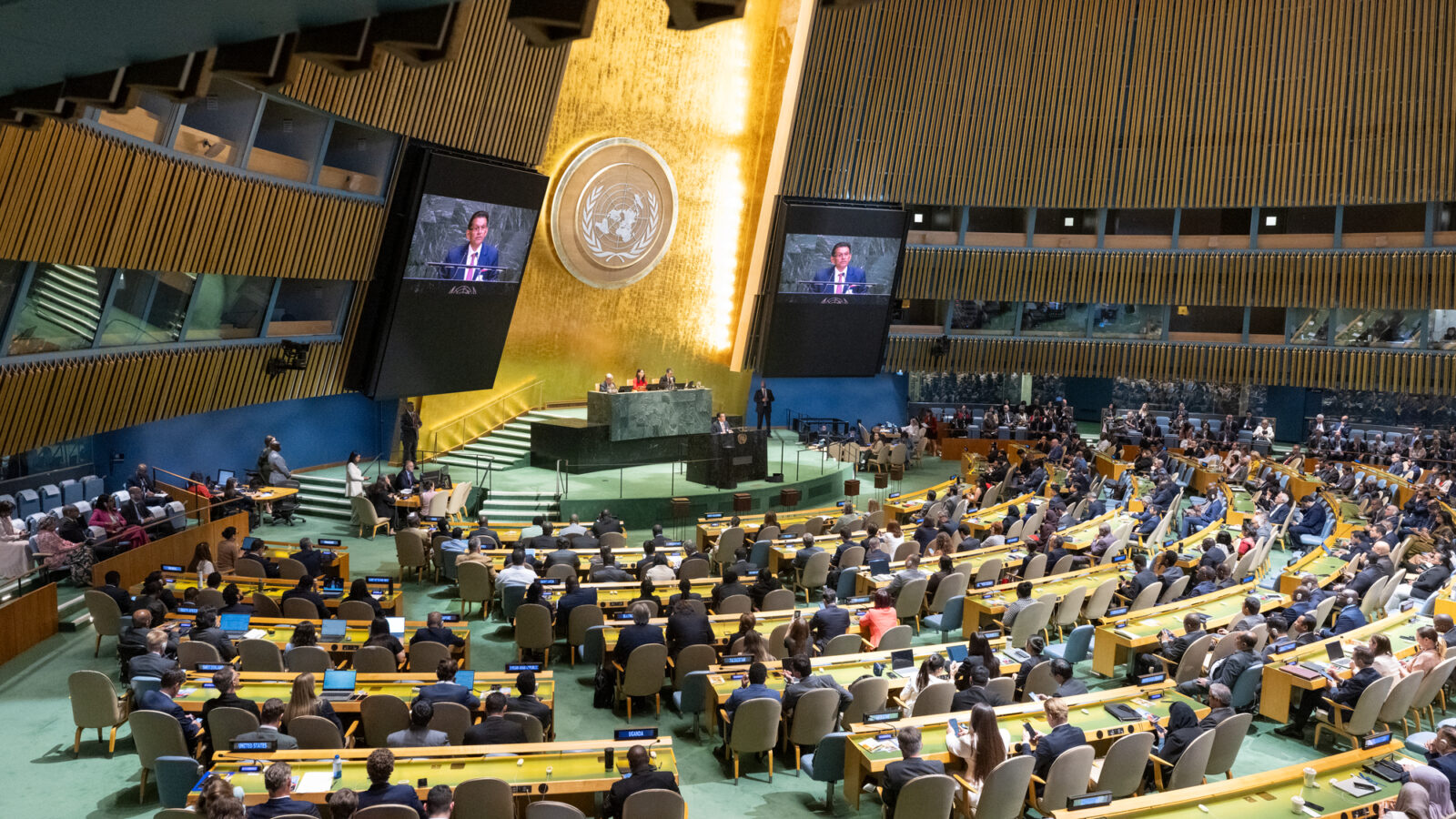
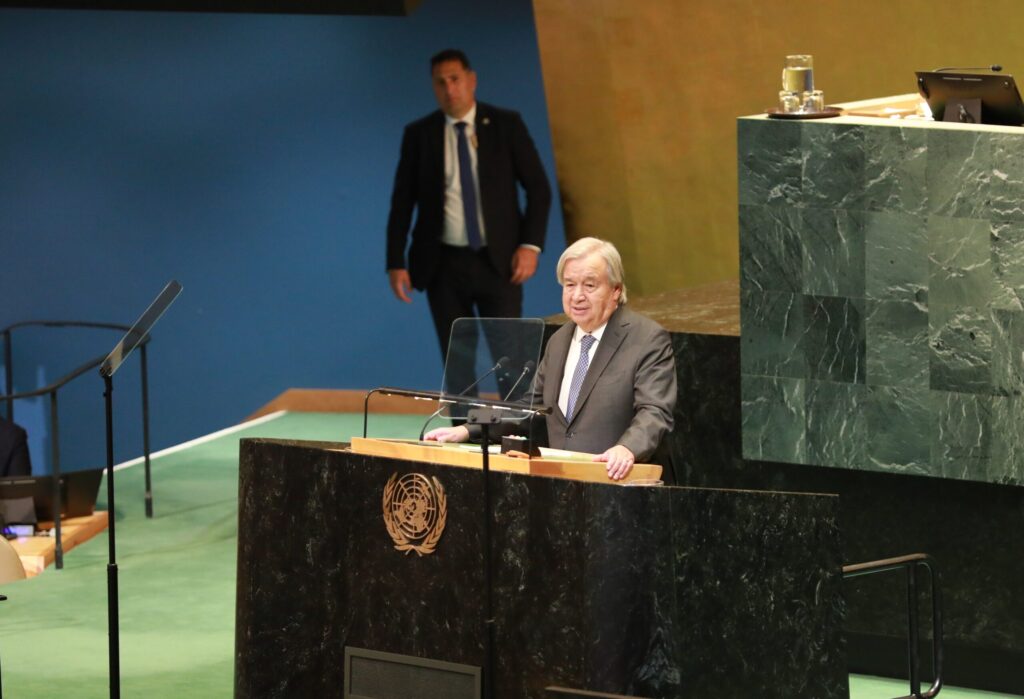
As the main deliberative organ of the international system with the broadest participation and universal representation, the UN General Assembly was established by the 1945 United Nations Charter and serves as an institutional diplomacy platform where the states of the world are represented on the basis of sovereign equality. Operating at the United Nations Headquarters in New York, the organ is widely regarded as the most legitimate ground for debating global issues due to its democratic structure, where every member state has a single vote.
In this analysis, we examine the institutional structure of the UN General Assembly, its decision-making mechanism, its legal powers under the UN Charter, and the aspects that distinguish it from the Security Council, in both their institutional and legal dimensions.
Table of Contents
What Is the UN General Assembly?
The UN General Assembly (UNGA) is the principal organ regulated under Chapter IV (Articles 9–22) of the UN Charter, the founding treaty of the United Nations system. Today, all 193 member states of the organization are represented in the General Assembly.
The foundation of the system rests on the principle of the “sovereign equality of all its Members,” highlighted in Article 2, Paragraph 1 of the UN Charter. According to this principle, regardless of a member state’s economic size, military capacity, or population density, each country has only one vote in the General Assembly. With this characteristic, the General Assembly is often referred to in international relations as the “global parliament” or the “conscience of global public opinion.”
Working Procedures and Decision-Making Mechanism of the General Assembly
According to current rules of procedure, the General Assembly begins its regular session every year on the Tuesday of the second week of September, counting from the first week that contains at least one working day. It continues its intensive work through the September–December period; sessions may resume in January and continue throughout the year until the topics on the agenda are concluded.
The decision-making procedure is determined by Article 18 of the UN Charter:
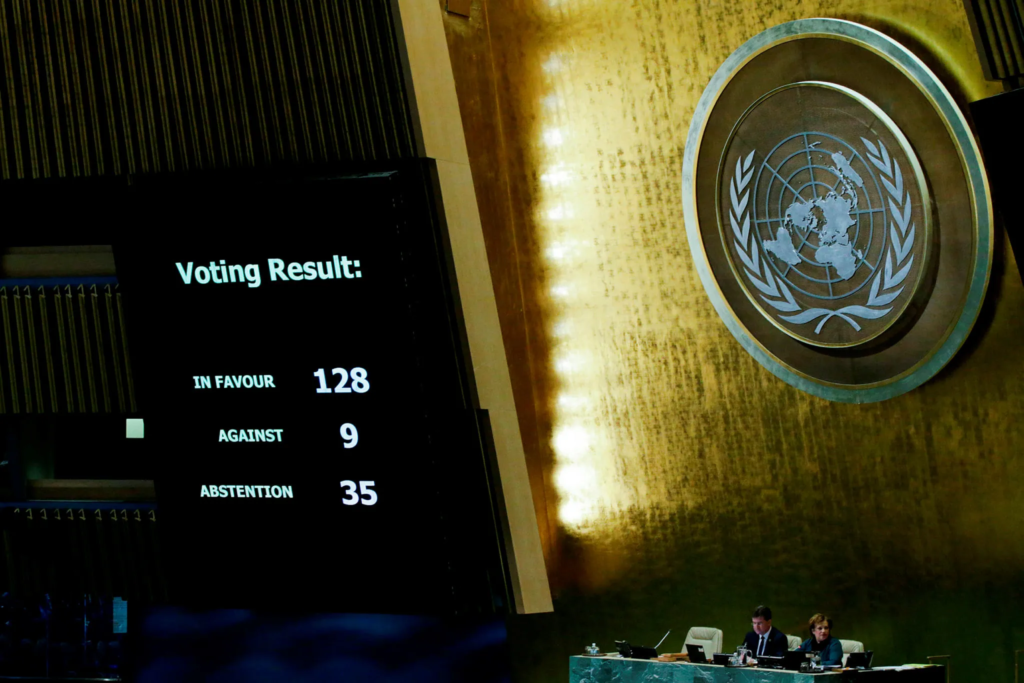
- Important Questions (Two-Thirds Majority): Recommendations with respect to the maintenance of international peace and security, the election of the non-permanent members of the Security Council, the election of the members of the Economic and Social Council (ECOSOC), the admission of new members, the suspension of the rights and privileges of membership, the expulsion of members, and budgetary questions shall be made by a two-thirds majority of the members present and voting.
- Other Questions (Simple Majority): Decisions on other questions, including the determination of additional categories of questions to be decided by a two-thirds majority, shall be made by a majority of the members present and voting (half plus one).
There are 6 main committees within the General Assembly where every member state is represented. These are: Disarmament and International Security (1st Committee), Economic and Financial (2nd Committee), Social, Humanitarian and Cultural (3rd Committee), Special Political and Decolonization (4th Committee), Administrative and Budgetary (5th Committee), and Legal (6th Committee).
5 Fundamental Powers and Duties of the UN General Assembly
The UN General Assembly possesses a broad scope of authority in line with the purposes and principles outlined in the UN Charter:
- Budgetary and Financial Control Power (Article 17): The authority to consider and approve the regular budget of the organization and the budgets of peacekeeping operations belongs to the General Assembly. The financial contributions to be paid by each member country are determined by the General Assembly.
- Election and Appointment Power: The General Assembly elects the 10 non-permanent members of the Security Council and the 54 members of ECOSOC; it elects the judges of the International Court of Justice (ICJ) through independent but parallel votes with the Security Council. Furthermore, it officially appoints the UN Secretary-General upon the recommendation of the Security Council.
- Development and Codification of International Law (Article 13): It initiates studies and makes recommendations for the purpose of encouraging the progressive development of international law and its codification. The International Law Commission is a subsidiary organ established by the General Assembly in pursuit of this duty.
- Negotiation and Recommendation on Global Issues (Articles 10 and 14): It may discuss any questions or any matters within the scope of the Charter, human rights violations, or global economic issues, and may make recommendations to the members or relevant institutions.
- “Uniting for Peace” Mechanism (Resolution 377 A (V)): According to this historic mechanism adopted in 1950; if the Security Council, because of lack of unanimity of the permanent members, fails to exercise its primary responsibility for the maintenance of international peace and security in any case where there appears to be a threat to the peace, breach of the peace, or act of aggression, the General Assembly shall consider the matter immediately under an Emergency Special Session with a view to making appropriate recommendations for collective measures.
Core Differences Between the UN General Assembly and the UN Security Council
The differences between the General Assembly and the Security Council—which holds the primary responsibility for international peace and security—are crucial for understanding the power dynamics of the international system.
| Criteria | UN General Assembly | UN Security Council |
| Number of Members and Representation | 193 Members (All members are equal) | 15 Members (5 Permanent + 10 Non-Permanent) |
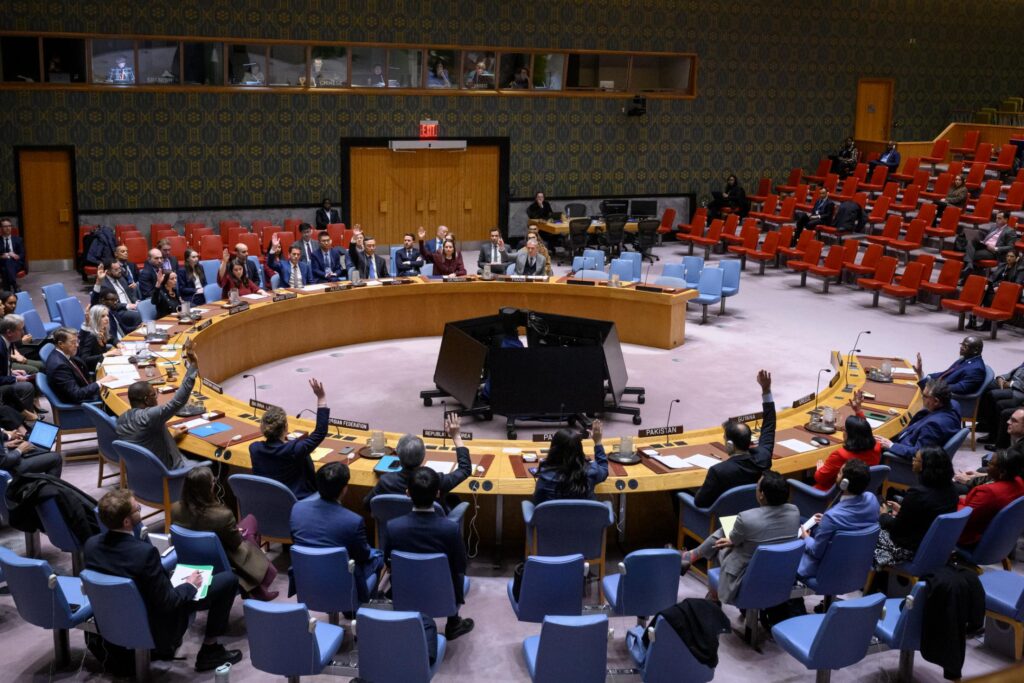
| Veto Power | None (Each state has 1 vote) | 5 Permanent Members (P5) have the right to veto |
| Legal Nature of Decisions | Largely recommendatory (Not legally binding) | Member states agree to accept and carry out the decisions of the Council in accordance with Article 25 of the Charter |
| Agenda Priority | Article 12 limits the General Assembly’s power to make recommendations with regard to a dispute or situation while the Security Council is exercising its functions; however, in practice, both organs can address the same issues in parallel. | Holds primary responsibility for international peace and security |
| Executive and Sanction Power | Cannot directly impose military sanctions or embargoes | Can apply economic sanctions under Chapter VII and authorize the use of force under necessary conditions |
You can access the details of the distinctions between the two organs and the Council’s role in crises in our article titled What Is the UN Security Council?.
Legal Nature of the Decisions: The Normative Power of Recommendations
The most frequently debated issue in international law doctrine is the binding level of General Assembly resolutions. According to the systematics of the UN Charter, the vast majority of UN General Assembly decisions, especially principle resolutions and declarations directed at states, are recommendatory; they do not impose direct legal enforcement obligations on states.
However, the political and normative weight of General Assembly resolutions is undeniable:
- Soft Law: It produces norms that are not legally binding but guide the behaviors of international actors. For example, the 1948 Universal Declaration of Human Rights was adopted as a General Assembly resolution, not as a binding treaty.
- Contribution to Customary Law: General Assembly resolutions can, under certain conditions, serve as evidence of the existence of a rule or the emergence of opinio juris (legal belief) in international law. In evaluating this, the content of the resolution, the conditions of its adoption, and the attitudes of states toward the resolution are taken into account; a high voting percentage alone does not constitute a binding customary rule.
The Role and Future of the General Assembly in the International System
In moments of crisis where global geopolitical competition deepens and the Security Council is deadlocked due to veto mechanisms, the UN General Assembly continues to be the center of international legitimacy. Although its decisions do not have direct military or economic sanctioning power, broad consensuses representing world public opinion remain the most powerful normative tool for exerting diplomatic and moral pressure on states.
Related Articles
Yalova University International Relations Department: Courses and Educational Approach
Discover the academic journey waiting for you at the Yalova University International Relations department, from the 100% English prep year…

What Do International Relations Graduates Do? From Yalova University to Career
From diplomacy and global corporate management to media and international trade, discover the diverse sectors where international relations graduates take…

81st UN General Assembly Begins: Agenda and Priorities for the 2026–2027 Session
An in-depth analysis of the 81st UN General Assembly's agenda and priorities for the 2026-2027 session, exploring global security, climate…