What Is the UN Security Council? Members, Veto Power, and Functions
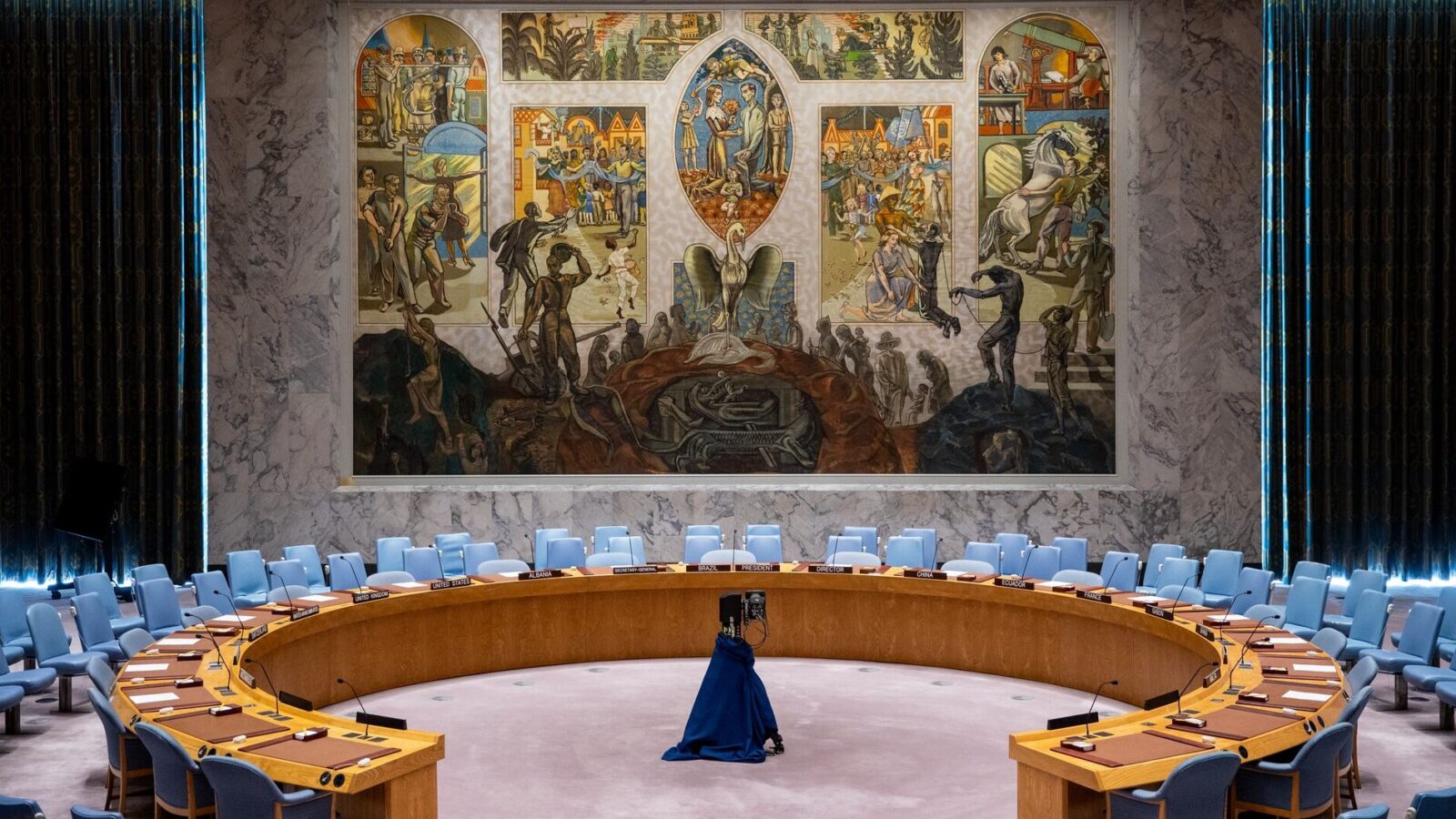
The UN Security Council is one of the principal organs of the United Nations and holds primary responsibility for maintaining international peace and security. While every UN member state is represented in the General Assembly, only 15 countries serve on the Security Council. The veto power held by its five permanent members has also remained one of the most debated issues in international politics for decades.
When wars, international crises, sanctions, or other threats to peace emerge, the UN Security Council can take significant decisions. Under the UN Charter, United Nations member states agree to accept and carry out the decisions of the Security Council.
For a broader overview of the organization’s history, purpose, and principal organs, you can also read our pillar article What Is the United Nations?.
Table of Contents
What Is the UN Security Council?
The UN Security Council is the United Nations organ established under Chapter V of the UN Charter and entrusted with primary responsibility for the maintenance of international peace and security. Article 24 of the Charter assigns this responsibility directly to the Security Council.
The Council can place an international dispute or crisis on its agenda, recommend methods for resolving disputes, call for sanctions, and, under certain conditions, decide on further measures. This broad range of authority is one of the main characteristics that distinguishes the Security Council from the other principal organs of the United Nations.
Article 25 of the UN Charter states that UN member states agree to accept and carry out the decisions of the Security Council. As a result, some decisions adopted by the Council can have direct and significant consequences within the international system.
Who Are the Members of the UN Security Council?
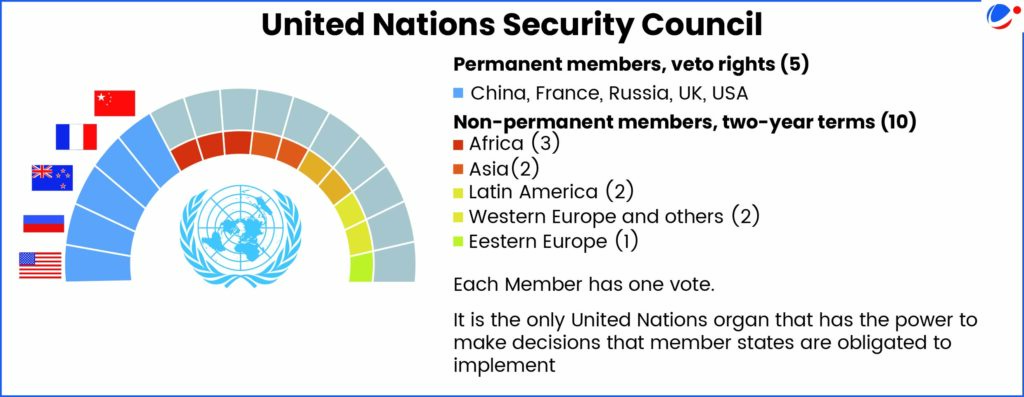
The UN Security Council consists of 15 members. Five are permanent members, while the other ten are non-permanent members elected by the United Nations General Assembly for two-year terms.
The five permanent members are:
- United States
- China
- France
- United Kingdom
- Russian Federation
The Council’s current membership and the terms of its elected members can be followed on the UN’s official Current Members of the Security Council page.
These five states not only hold permanent seats on the Council but also possess veto power over substantive decisions.
Non-Permanent Members of the UN Security Council
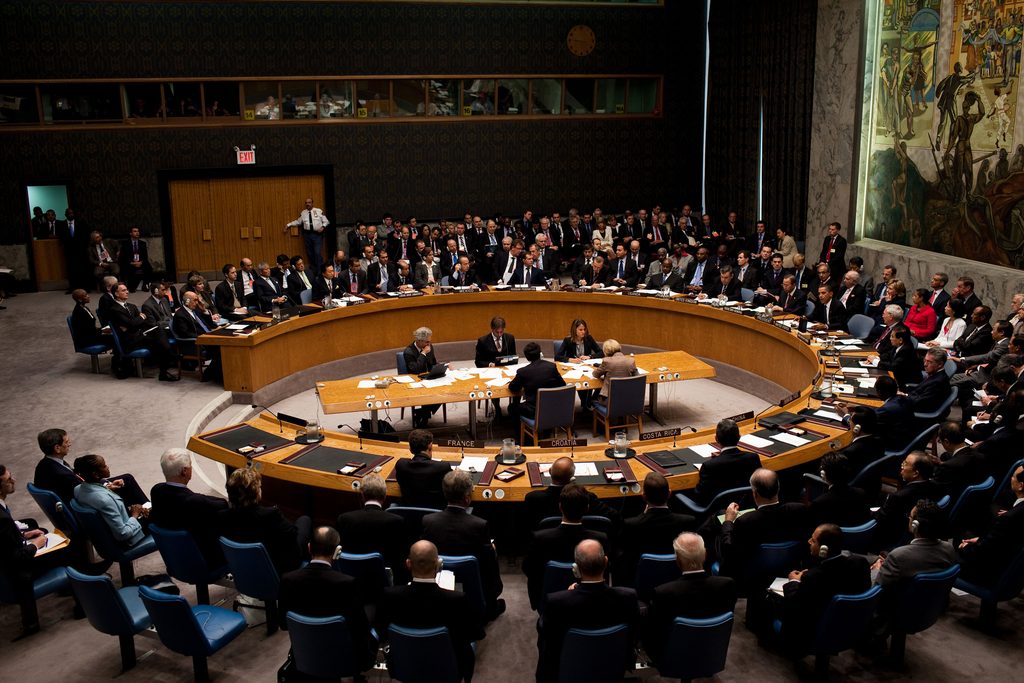
The other 10 members of the Council do not hold permanent seats. They are elected by the United Nations General Assembly and serve two-year terms. Elections take into account both states’ contributions to international peace and security and the principle of equitable geographical distribution.
As of 2026, the 10 elected members of the UN Security Council are:
- Bahrain
- Colombia
- Democratic Republic of the Congo
- Denmark
- Greece
- Latvia
- Liberia
- Pakistan
- Panama
- Somalia
The terms of Denmark, Greece, Pakistan, Panama, and Somalia end at the conclusion of 2026. Bahrain, Colombia, the Democratic Republic of the Congo, Latvia, and Liberia will serve through the end of 2027. This current membership is confirmed by the UN Security Council’s official member list.
Because this section contains time-sensitive membership information, it should be reviewed whenever the article is updated in future years.
What Is Veto Power in the UN Security Council?
One of the most frequently debated features of the UN Security Council is the veto power.
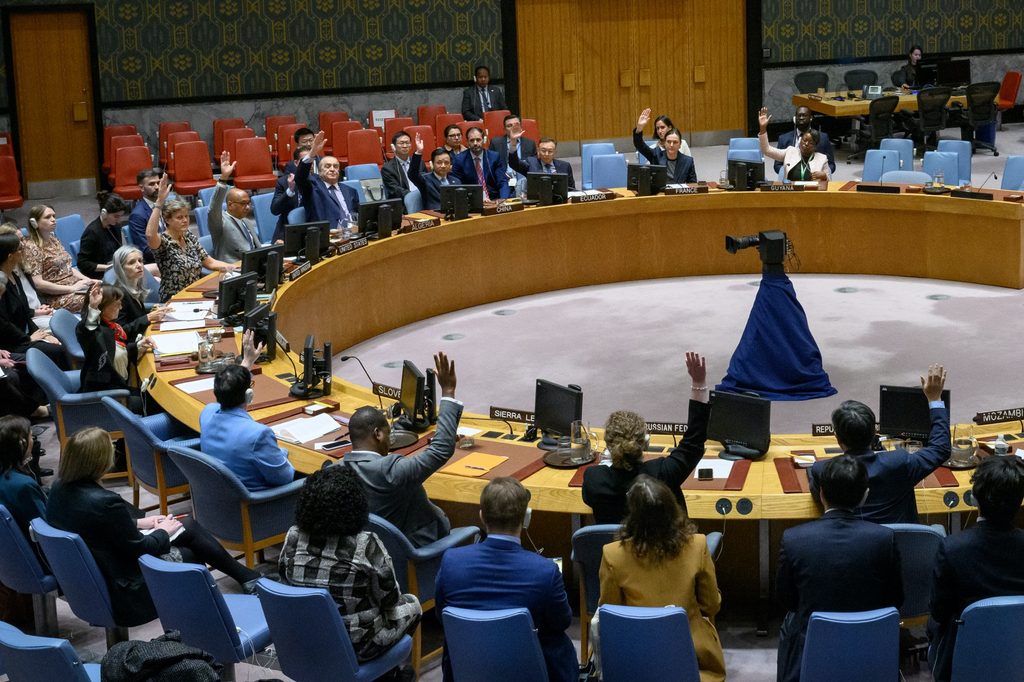
Although each Council member has one vote, the five permanent members occupy a special position. On substantive matters, a negative vote by any one of the permanent members can prevent a draft resolution from being adopted even if it receives the necessary support from other members. This authority is commonly referred to as the right of veto.
The United Nations provides a detailed explanation of this mechanism on its official Security Council Voting System page.
An abstention by a permanent member, however, does not have the same effect as a veto. If a draft resolution receives the required nine affirmative votes, an abstention by one or more permanent members does not by itself prevent the resolution from being adopted.
How Does the UN Security Council Make Decisions?
Each of the 15 members of the UN Security Council has one vote.
For procedural matters, a decision requires at least nine affirmative votes. Decisions on other substantive matters also require nine affirmative votes, but the special position and veto power of the five permanent members become particularly important in these cases.
This system means that decision-making within the Security Council depends not only on obtaining a numerical majority but also, in practice, on the political positions of the five permanent members.
As a result, when major powers are directly opposed during an international crisis, reaching a common and effective Security Council decision can become considerably more difficult. The UN’s official voting rules confirm the nine-vote requirement and the special role of the permanent members in substantive decisions.
What Are the Functions of the UN Security Council?
The UN Security Council is not an institution that becomes relevant only after a war has already begun. Its functions and powers cover a much broader range of security issues.
According to the UN’s official Functions and Powers of the Security Council page, the Council can work to maintain international peace and security, investigate disputes that could lead to international friction, recommend methods of settlement, identify threats to peace or acts of aggression, call for economic sanctions and other measures, and, where necessary, take decisions concerning military action.
The Council also recommends the admission of new states to the United Nations. It makes a recommendation to the General Assembly regarding the appointment of the UN Secretary-General and works together with the General Assembly in the election of judges to the International Court of Justice.
Can the UN Security Council Impose Sanctions?
Yes. When the UN Security Council determines that international peace and security are threatened, it may decide on measures that do not involve the use of military force.
These measures can include economic sanctions, asset freezes targeting specific individuals or organizations, travel bans, and arms embargoes.
Sanctions are among the important tools available within the UN system for applying international pressure without immediately resorting to military force. The basic legal framework governing the Security Council’s authority to identify threats to peace and determine appropriate measures is found in Chapter VII of the UN Charter.
Can the UN Security Council Authorize Military Action?
Chapter VII of the UN Charter provides the legal framework for the Security Council’s powers in situations involving threats to the peace, breaches of the peace, and acts of aggression.
The Council may first decide on measures that do not involve the use of armed force. If such measures prove inadequate, however, further action may be considered in order to maintain or restore international peace and security. The United Nations also includes military action among the powers available to the Security Council when the necessary conditions are met.
Article 51 of the UN Charter also recognizes the inherent right of states to individual or collective self-defense. This legal framework is particularly important for understanding NATO’s system of collective defense.
We examine this connection in greater detail in our article What Is NATO Article 5? How Collective Defense Works.
Why Is the UN Security Council Criticized?
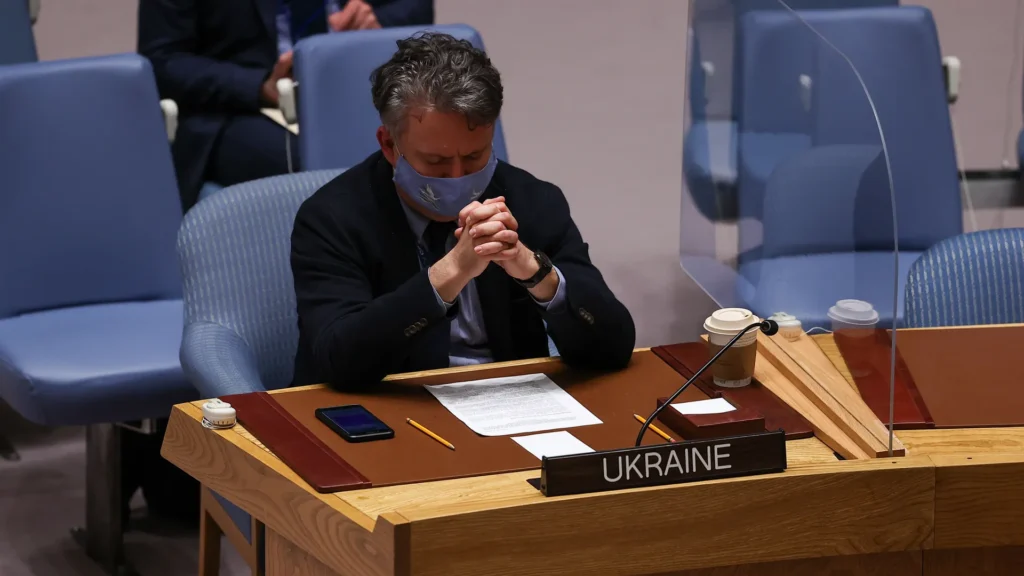
One of the most criticized aspects of the Council is the privileged position and veto power of its five permanent members.
Because of the veto system, a draft resolution may fail even when it receives broad support if one permanent member casts a negative vote. This mechanism can limit the Council’s ability to make decisions, particularly during international crises in which a permanent member or one of its close allies is directly involved.
Another major debate concerns the extent to which the current structure of the Council reflects the distribution of power and representation in today’s international system.
The foundations of the permanent membership system were established as part of the international order created after World War II. As a result, debates over Security Council reform and demands for broader and more balanced representation have continued for many years.
At the same time, making comprehensive changes to the structure of the Council remains a highly difficult process, both legally and politically.
Why Is the UN Security Council Important in the International System?
Because of its authority in matters of international peace and security, the UN Security Council is one of the most influential organs within the United Nations system.
Its 15-member structure, the veto power of its five permanent members, and the commitment of UN member states to accept and carry out Security Council decisions give the institution a unique position in international politics.
At the same time, this structure creates an important dilemma. When the major powers are able to reach agreement, the Council can take significant decisions in response to international crises. When serious political disagreements exist among the permanent members, however, the decision-making process can become considerably more difficult.
For this reason, understanding the UN Security Council is important not only for understanding how the United Nations operates, but also for analyzing great-power politics, international law, and the wider global security system.
Related Articles
NATO-EU Defense Cooperation: Current Trends in European Security
NATO-EU defense cooperation has become increasingly important as Europe responds to the Russia-Ukraine war, higher defense spending, new security threats,…

What Is NATO Article 5? How Collective Defense Works
NATO Article 5 is the foundation of the alliance’s collective defense system. Learn what Article 5 means, how it is…