What Is the United Nations?
What Is the United Nations? Purpose, Structure, and Importance
The United Nations (UN) is an international organization established to maintain international peace and security, promote cooperation among states, and develop common solutions to global challenges. Founded in the aftermath of World War II, the organization emerged largely from the desire to prevent another devastating global conflict.
For this reason, the question “What is the United Nations?” remains one of the fundamental topics in the study of international relations.
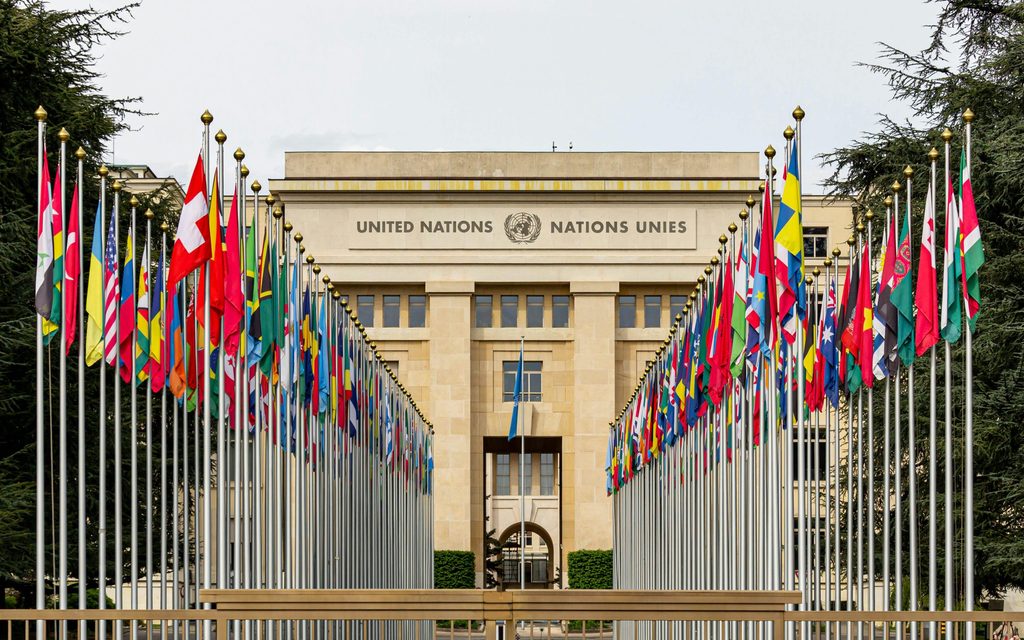
Today, the United Nations operates in a wide range of areas, including security, human rights, development, humanitarian assistance, the environment, and international law. With 193 member states, the UN is one of the world’s most broadly represented international organizations. Its headquarters are located in New York City, while major UN offices also operate in cities such as Geneva, Vienna, and Nairobi.
Table of Contents
When and Why Was the United Nations Founded?
The United Nations was officially established on October 24, 1945. The main reason behind its creation was the determination to prevent the enormous destruction caused by World War I and World War II from happening again.
The League of Nations, which had been established after World War I with similar objectives, had not been sufficiently successful in preserving international peace. Following World War II, states developed a shared understanding that a more comprehensive and effective international organization was necessary.
On June 26, 1945, the Charter of the United Nations was signed in San Francisco. After the Charter was ratified by the required states, the UN officially came into existence on October 24, 1945. For this reason, October 24 is observed each year as United Nations Day.
Türkiye was also among the founding members of the United Nations.
What Are the Purposes of the United Nations?
To fully understand what the United Nations is, it is also necessary to examine the organization’s main purposes and areas of activity. The fundamental purposes of the United Nations are set out in the opening articles of its founding Charter. At the center of the organization’s activities is the preservation of peace and cooperation within the international system.
The main purposes of the UN include:
- Maintaining international peace and security,
- Promoting friendly relations among states,
- Encouraging international cooperation in solving economic, social, cultural, and humanitarian problems,
- Promoting respect for human rights and fundamental freedoms,
- Providing an international platform where states can discuss common challenges.
Because of these objectives, the UN is not an organization concerned solely with war and security. Issues such as poverty, migration, climate change, education, health, children’s rights, and humanitarian crises also fall within the broader scope of its work.
What Are the Principal Organs of the United Nations?
The United Nations is composed of six principal organs: the General Assembly, Security Council, Economic and Social Council, International Court of Justice, Secretariat, and Trusteeship Council.
United Nations General Assembly
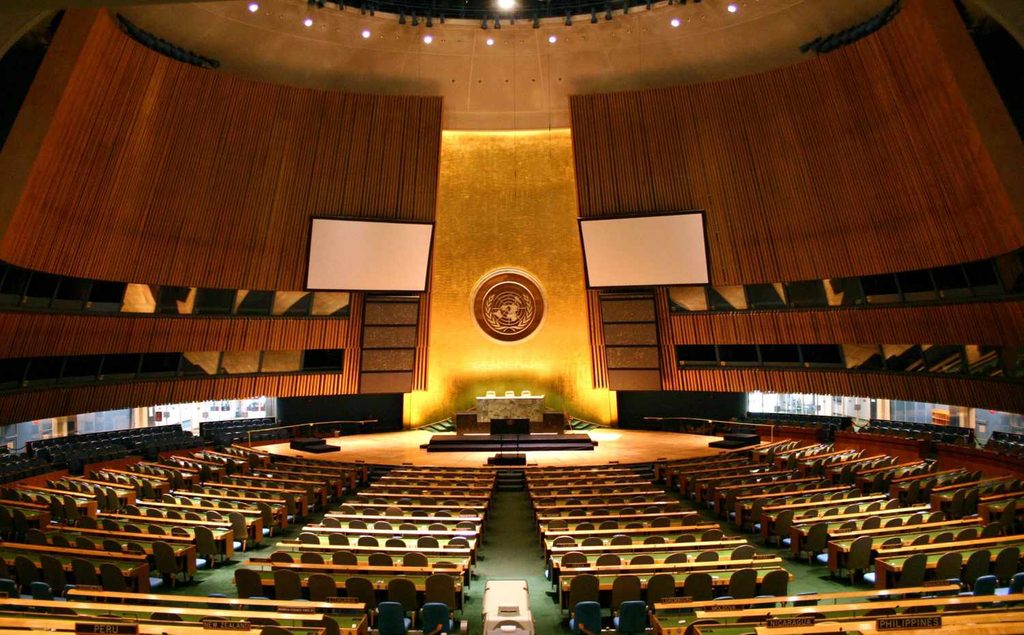
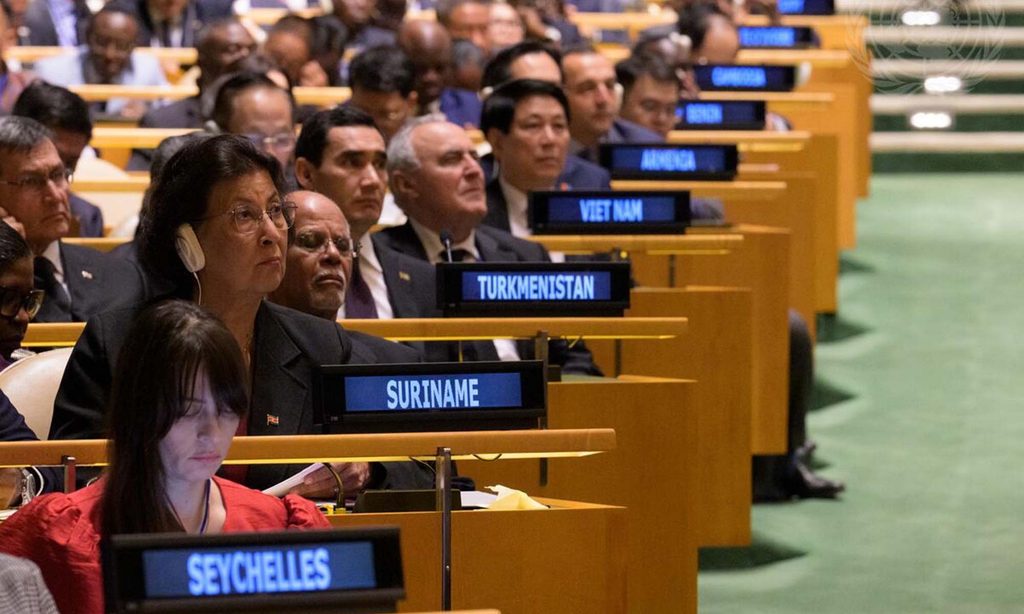
The General Assembly is the main deliberative body in which all United Nations member states are represented. Each member state has one vote in the General Assembly.
A wide range of issues can appear on its agenda, including international security, the UN budget, development, human rights, and international cooperation. Although many General Assembly resolutions are recommendations rather than legally binding decisions, they can carry considerable political significance because they often reflect the broader views of the international community.
What Is the United Nations Security Council?
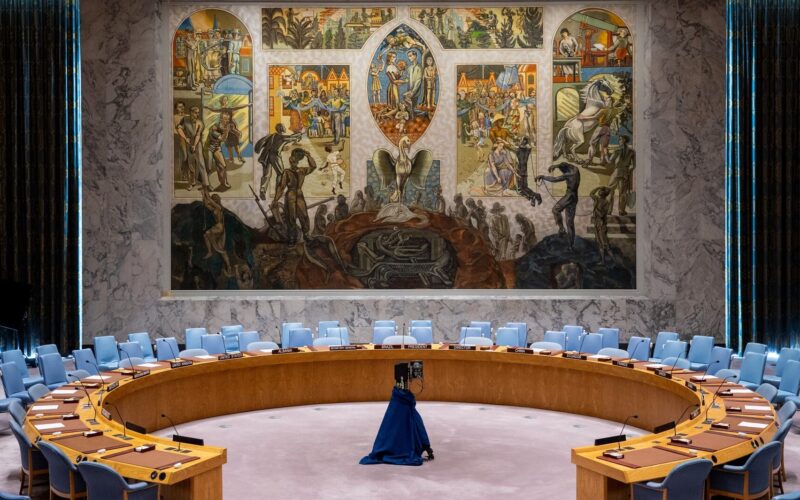
The United Nations Security Council is the UN organ with primary responsibility for maintaining international peace and security. The Council consists of 15 members.
The United States, United Kingdom, France, China, and Russia are the five permanent members of the Security Council. The remaining ten members are elected by the General Assembly for limited terms.
The right of veto held by the permanent members is one of the most debated features of the Security Council. If any of the five permanent members vetoes a substantive draft resolution, the resolution cannot be adopted.
Some argue that this system helps ensure that major powers remain engaged within the UN framework. Others argue that the veto can make it difficult for the Security Council to take effective action during international crises.
What Does the International Court of Justice Do?
The International Court of Justice (ICJ) is the principal judicial organ of the United Nations and is based in The Hague, Netherlands.
The Court can consider legal disputes between states in accordance with international law. It can also issue advisory opinions on legal questions when requested by authorized UN organs and certain international organizations.
The International Court of Justice is not a criminal court that prosecutes individuals. Its work primarily concerns legal disputes between states.
What Areas Does the United Nations Work In?
Numerous organizations operate under the broader UN system or in connection with it. UNICEF works on the protection and development of children, UNESCO focuses on education, science, and culture, while the World Health Organization works on international public health.
The United Nations also supports humanitarian assistance for people affected by wars and natural disasters, contributes to the development of sustainable development policies, and plays an important role in establishing international standards for the protection of human rights.
As a result, the UN’s influence is not limited to diplomacy between governments. Its work extends into areas that affect the everyday lives of millions of people around the world.
Why Is the United Nations Important?
Today, the answer to the question “What is the United Nations and why is it important?” can largely be found in the diplomatic platform the organization provides for states.
The United Nations is not a world government capable of solving every problem within the international system. Its decision-making processes are directly influenced by the political preferences, interests, and power relationships of its member states.
The veto system in the Security Council, in particular, can limit the UN’s ability to act during crises involving disagreements among major powers.
Despite these limitations, the United Nations remains one of the most important international platforms where states can engage in diplomatic negotiations, develop rules of international law, and coordinate collective efforts to address global challenges.
To learn more about another major organization active in the field of international security, you can also read our article What Is NATO?.
Conclusion
In short, the question “What is the United Nations?” can be answered by describing it as a global organization that works to promote international peace, security, development, and cooperation.
Related Articles
NATO-EU Defense Cooperation: Current Trends in European Security
NATO-EU defense cooperation has become increasingly important as Europe responds to the Russia-Ukraine war, higher defense spending, new security threats,…
What Is the UN Security Council? Members, Veto Power, and Functions
The UN Security Council is the United Nations body with primary responsibility for international peace and security. Learn about its…

What Is NATO Article 5? How Collective Defense Works
NATO Article 5 is the foundation of the alliance’s collective defense system. Learn what Article 5 means, how it is…