Türkiye-Iraq Development Road 2026: The Project’s Geopolitical and Economic Significance
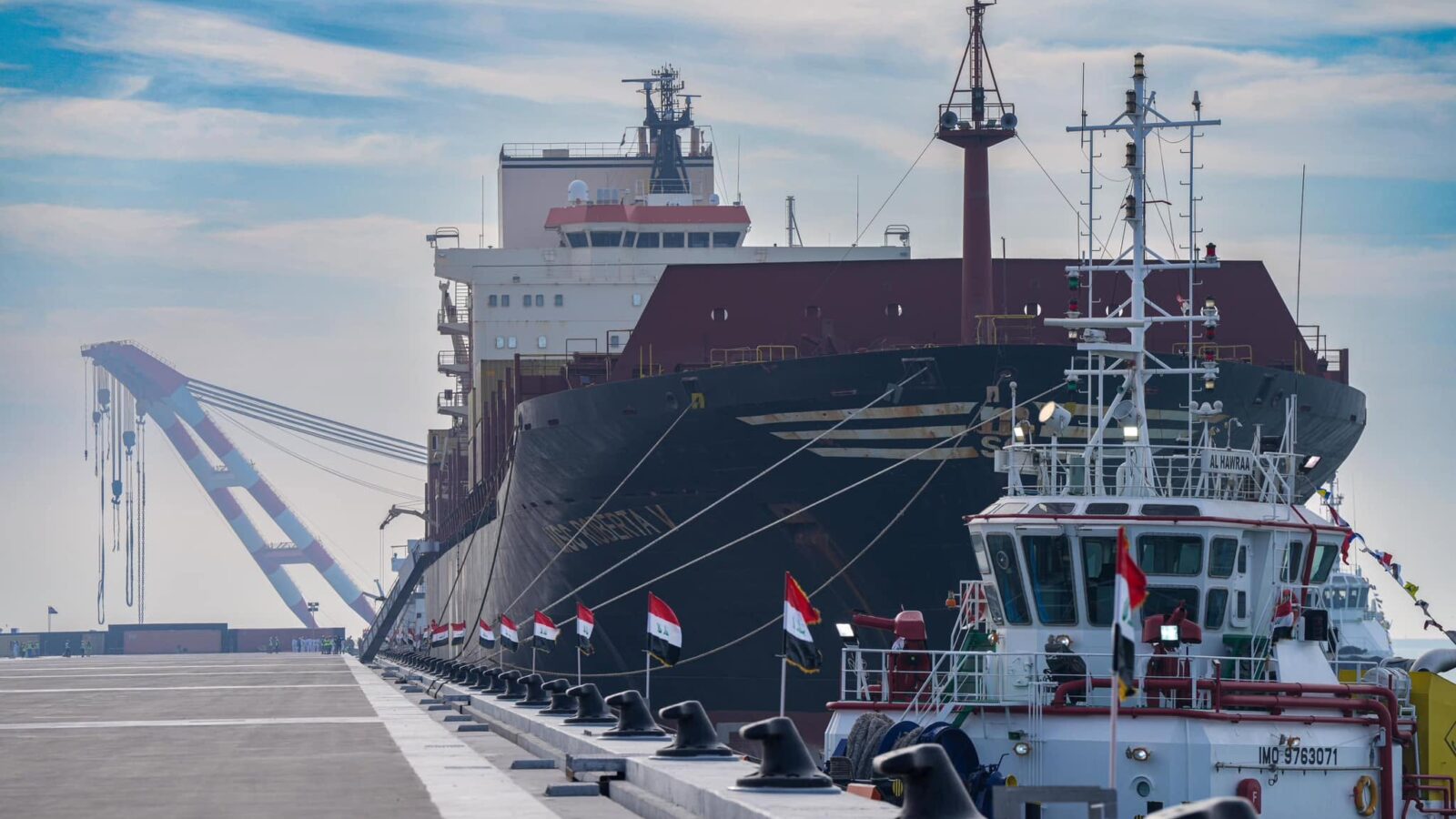
Aiming to connect the Persian Gulf to Europe through Türkiye, the Türkiye-Iraq Development Road entered a new stage in its implementation preparations following technical and financial talks held in August 2026. During meetings between Turkish and Iraqi authorities in Baghdad on August 17–20, the parties discussed border crossings, railway integration, the Ovaköy–Fishkhabur connection, procurement processes, and the project’s financing model.
The project is significant not only as a transportation corridor but also in terms of Iraq’s economic diversification, Türkiye’s position within international logistics networks, and the development of trade links between the Gulf and Europe. In this analysis, we examine the technical structure of the Türkiye-Iraq Development Road, developments in August 2026, its economic potential, and its possible implications for regional geopolitics based on official Turkish and Iraqi sources.
Table of Contents
What Is the Türkiye-Iraq Development Road Project? Route and Technical Infrastructure
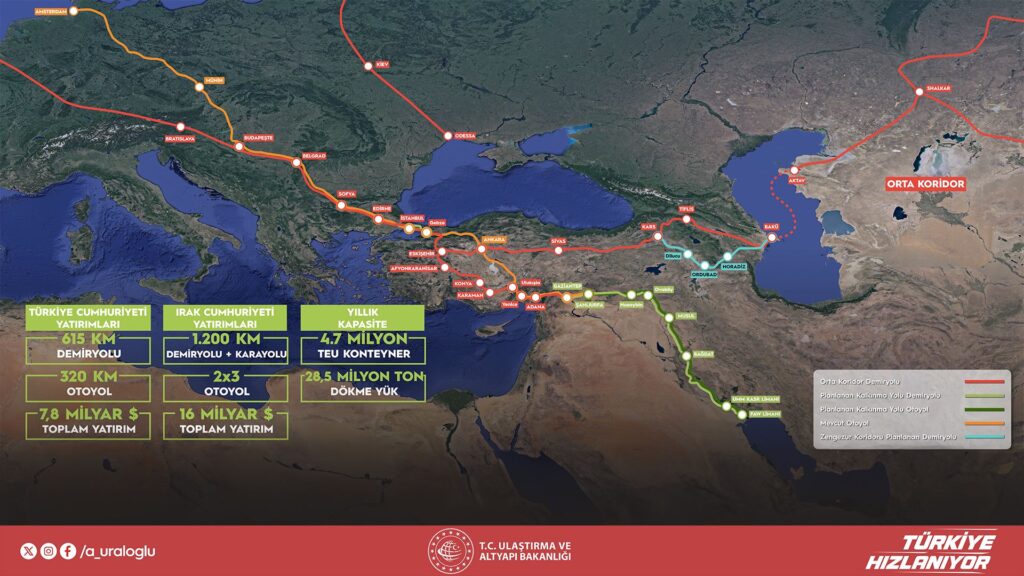
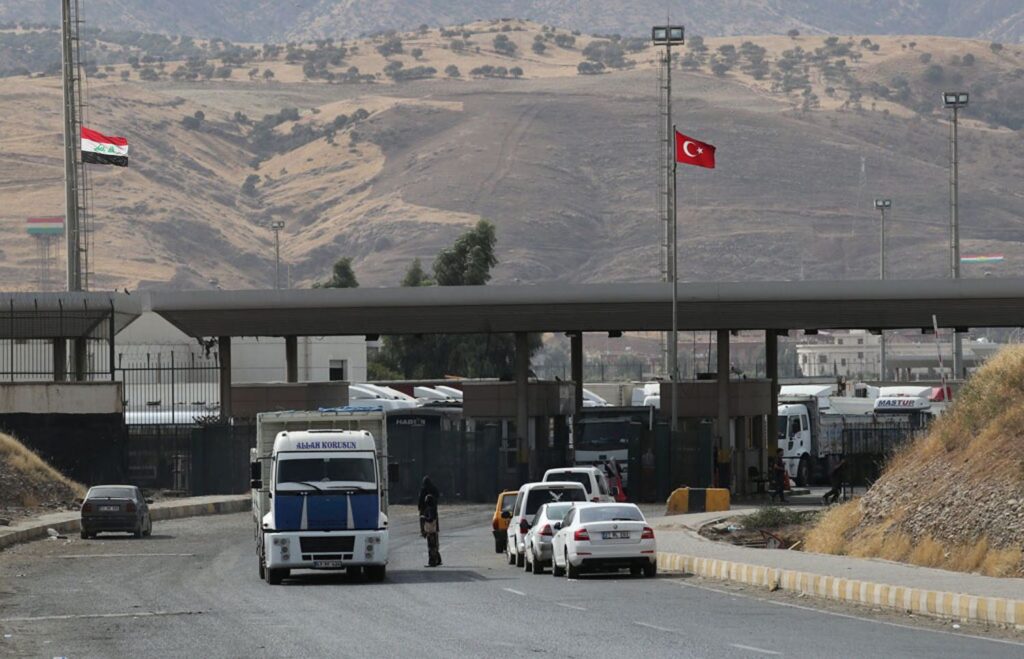
The Development Road is an approximately 1,200-kilometer rail and highway corridor planned to begin at the Grand Faw Port, currently under construction in Iraq’s Basra Governorate, cross Iraq from south to north, and reach the Turkish border. The project is expected to connect to Türkiye through Ovaköy and, from there, provide access to Europe through Türkiye’s existing transportation networks.
The core transportation infrastructure of the Türkiye-Iraq Development Road consists of a railway line, modern highway connections, the Grand Faw Port, and cross-border infrastructure between Türkiye and Iraq.
According to estimates by the Ministry of Transport and Infrastructure of the Republic of Türkiye, transporting cargo from the Grand Faw Port to Europe via the Development Road is expected to provide a significant time advantage compared with certain existing maritime routes. Ministry statements indicate that travel times on specific routes could be shortened by up to approximately 15 days.
As of 2026, the project has neither been fully completed nor become fully operational. According to a February 2026 statement by Iraq’s Ministry of Transport, final railway designs had reached approximately 88% completion, while highway designs had reached 78%. Under Iraq’s current planning framework, 2031 is the target for completing the project’s first phase.
Developments of August 17–20, 2026: Implementation and Financing
The meetings held in August 2026 indicate that the Türkiye-Iraq Development Road is moving from a broad political vision toward a more concrete agenda focused on implementation preparations.
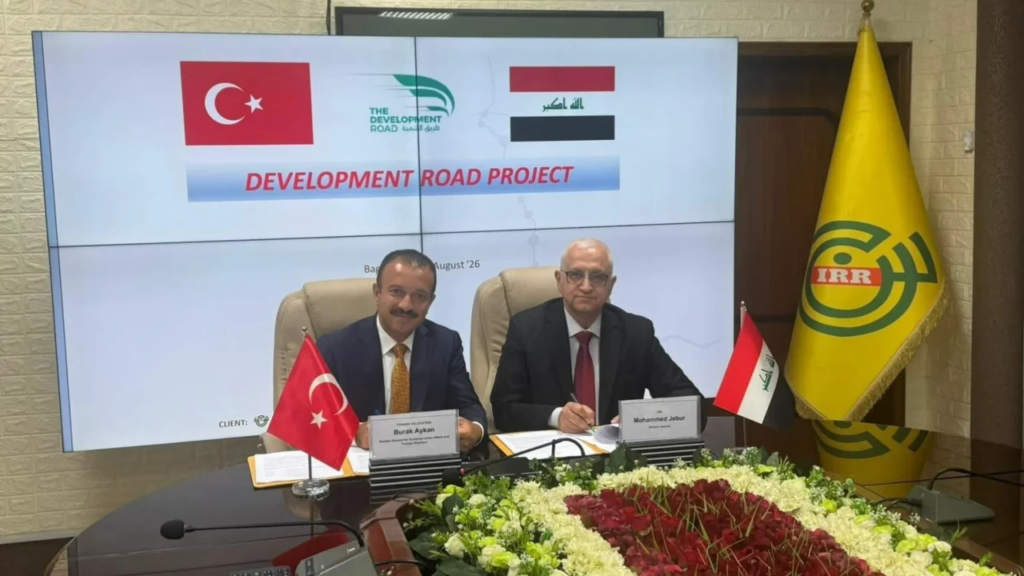
On August 17, a delegation from Türkiye’s Ministry of Transport and Infrastructure met with Iraq’s Border Ports Authority in Baghdad. The meeting addressed the activation of the Development Road, the development of transit transportation, the facilitation of border crossings, and efforts to increase Türkiye-Iraq trade volumes.
During talks with Iraqi Republic Railways on August 18, the parties discussed the identification of railway sections to be implemented in the initial phase, the financing model, the use of Iraqi oil resources for financing, technical standards, procurement and implementation processes, and the Ovaköy–Fishkhabur connection. The parties also agreed to continue consultations aimed at improving technical compatibility and interoperability between the Turkish and Iraqi railway networks.
The second joint meeting on financing was held in Baghdad on August 20, 2026, and announced publicly on August 25. The meeting addressed converting oil resources to be allocated by Iraq into economic value for financing transportation investments, ensuring continuity in financing flows, and establishing an institutional financing structure.
These developments do not mean that every aspect of the project’s financing and procurement model has been finalized. They do, however, indicate that technical, financial, and administrative preparations are being addressed in increasingly concrete terms.
The Project’s Geopolitical Significance: An Alternative Route in Global Supply Chains
The Development Road is an important connectivity project in terms of diversifying transportation routes between the Gulf region, Türkiye, and Europe. Security challenges in the Red Sea and disruptions to global supply chains have also increased international interest in alternative transportation routes.
Within this framework, rather than describing the Türkiye-Iraq Development Road as a direct competitor to projects such as China’s Belt and Road Initiative or the India-Middle East-Europe Economic Corridor, it can be viewed as an alternative and complementary route within existing global connectivity networks.
The project’s multilateral dimension is also significant. On April 22, 2024, Türkiye, Iraq, Qatar, and the United Arab Emirates signed a Quadrilateral Memorandum of Understanding on Joint Cooperation concerning the Development Road. The memorandum provides an institutional framework for cooperation among the four countries. However, because there is no officially confirmed arrangement under which Qatar or the UAE has assumed specific procurement or investment packages, the scope of their future financial participation remains to be determined.
Economic Expectations and Regional Integration
The project’s intended economic effects are not limited to transit revenues. Iraq’s National Development Plan 2024–2028 envisions the development of industrial zones, new settlements, and commercial activities along the Development Road.
From Iraq’s perspective, the project is regarded as one of the tools that could contribute to diversifying economic activity through the development of the transportation and logistics sectors. However, it would not be accurate to conclude that the project alone will eliminate Iraq’s dependence on oil revenues.
For Türkiye, the Türkiye-Iraq Development Road has the potential to create a new link for freight flows between the Gulf and Europe. Integrating the planned route from Iraq into Türkiye through Ovaköy with the country’s national railway and highway systems could increase the importance of Southeastern Anatolia within regional logistics networks.
If completed as planned, the integration of ports, railways, highways, and logistics centers could also contribute to broader Middle East-Europe trade networks.
Security Challenges and Regional Stability
Route security and political stability in Iraq are among the important conditions for realizing the Development Road’s economic potential. Security cooperation between Türkiye and Iraq has also developed in recent years through a separate bilateral mechanism.
In March 2024, Iraq designated the PKK as a “banned organization.” Later that year, Türkiye and Iraq signed the Memorandum of Understanding on Military, Security and Counterterrorism Cooperation. Security talks between the two countries have addressed the PKK as well as Daesh and other armed threats.
However, there is no official decision from the August 2026 Development Road talks declaring the route a “joint terrorism-free security zone” or establishing a new military arrangement of this kind.
For this reason, the security dimension is better understood not as a new military structure specifically created for the Türkiye-Iraq Development Road, but as part of the broader Türkiye-Iraq security relationship that may affect the project’s continuous and secure operation.
Conclusion: A New Era of Transport Diplomacy in the Middle East
The August 2026 talks indicate that the Türkiye-Iraq Development Road is not yet a completed transportation corridor, but that it is moving from the design stage toward a period in which financing, procurement, and implementation preparations are being addressed in more concrete terms.
The development of the technical framework for the Ovaköy–Fishkhabur connection, railway interoperability, and the further definition of financing mechanisms are among the key issues to monitor as the project moves forward.
If the financing model is finalized, infrastructure work progresses according to the planned timeline, and security risks can be effectively managed, the Development Road could contribute to Iraq’s economic diversification, Türkiye’s position within international logistics networks, and stronger commercial connections between the Gulf and Europe.
For more current analyses and international relations content, you can explore our other publications on yalovaui.com.
Related Articles
Armenia-Azerbaijan Peace Process in 2026: How Could Normalization Reshape the South Caucasus?
An analysis of the Armenia-Azerbaijan peace process in 2026, examining the Bishkek meeting, economic normalization, border delimitation, and the TRIPP…

Studying International Relations in Yalova: Advice from a Student Perspective
What is it like to study international relations in Yalova? Explore practical student advice on campus life, academic reading, YUİT…

What Is the UN General Assembly? Its Powers and Differences from the Security Council
An in-depth guide to the UN General Assembly: Explore its democratic structure, working procedures, 5 fundamental powers, and its differences…