
What Is the European Union? Goals, Institutions, and Relations with Türkiye

The question “what is the European Union?” is one of the fundamental starting points for understanding European politics, economics, and international relations. The European Union (EU) is a political and economic integration structure in which 27 European countries cooperate through common institutions and treaties.
Elements such as the single market, a shared legal framework, common policies, and a common currency for some member states distinguish the EU from traditional international organizations. At the same time, the European Union is not a single state. Its member countries remain sovereign states while sharing certain powers with common institutions in areas defined by the founding treaties.
For this reason, answering the question “what is the European Union?” requires more than simply describing it as a union of 27 countries. Its historical development, institutions, decision-making system, single market, and distribution of powers between the EU and its member states must all be considered together.
Understanding what is the European Union also requires recognizing its distinctive position between traditional intergovernmental cooperation and supranational integration.
Table of Contents
What Is the European Union?
At the most basic level, the question “what is the European Union?” can be answered by describing it as a treaty-based integration structure in which European countries cooperate in common economic, political, and legal areas.
As of 2026, the EU has 27 member states. The European Union encompasses a population of approximately 450 million people and operates a single market across its 27 member countries, allowing goods, services, capital, and people to move freely under a shared set of rules.
The current list of EU member states can be found on the European Union’s official EU countries page.
The powers of the European Union are not unlimited. The EU’s founding treaties determine the areas in which decisions can be made at the European level and the areas in which authority remains with the member states.
This division of powers is essential to understanding what is the European Union and how it differs from both a federal state and a conventional international organization.
How Did the European Union Emerge?
The institutional foundations of European integration were laid in the aftermath of World War II. In 1951, Belgium, France, Germany, Italy, Luxembourg, and the Netherlands established the European Coal and Steel Community. The Treaties of Rome, signed in 1957, later established the European Economic Community and Euratom.
Over time, this structure expanded beyond economic cooperation.
The Maastricht Treaty, signed in 1992, marked an important turning point. When the treaty entered into force on November 1, 1993, the European Union was formally established. The Maastricht process also paved the way for deeper cooperation in areas such as the common currency, foreign policy, and security.
This historical development is particularly important when explaining what is the European Union, because the EU was not created in a single step but evolved through decades of treaties and institutional integration.
More information about this historical development is available on the EU’s official history page.

What Are the Goals and Values of the European Union?
To fully understand what is the European Union, it is necessary to look not only at its institutions but also at its founding objectives and officially recognized values.
The objectives set out in the EU’s founding treaties include promoting peace, improving the well-being of its citizens, maintaining the internal market, supporting sustainable development, advancing economic and social integration, encouraging scientific and technological progress, and upholding international law.
The European Union’s fundamental values include human dignity, freedom, democracy, equality, the rule of law, and human rights.
These goals and values serve as important reference points in a wide range of areas, from membership criteria to EU legislation and common policies.
The EU explains these principles in greater detail on its official Aims and Values page.
How Many Countries Are in the European Union?
As of 2026, the European Union consists of 27 member states.
Its six founding countries are:
- Belgium
- France
- Germany
- Italy
- Luxembourg
- the Netherlands
Countries from different parts of Europe joined the Union through successive waves of enlargement. Croatia became the most recent country to join the EU in 2013, while the United Kingdom officially left the Union on January 31, 2020.
Understanding what is the European Union also requires recognizing that being geographically located in Europe is not sufficient for EU membership. Candidate countries must meet the Copenhagen criteria, which include requirements concerning democracy, the rule of law, human rights, a functioning market economy, and the ability to implement EU law.
Membership is therefore based not only on geography but also on political, economic, and legal conditions.
What Are the Institutions of the European Union?
The European Union has seven official institutions:
- European Parliament
- European Council
- Council of the European Union
- European Commission
- Court of Justice of the European Union
- European Central Bank
- European Court of Auditors
The EU’s institutional structure also includes numerous additional bodies and agencies alongside these seven institutions.
The European Parliament, Council of the European Union, and European Commission are particularly important in the EU’s legislative and decision-making processes.
In general, the European Commission proposes new EU legislation, while the European Parliament and the Council of the European Union examine and jointly adopt legislation under the ordinary legislative procedure.
The European Council, meanwhile, brings together the heads of state or government of the member states and defines the EU’s overall political direction and priorities. It does not normally adopt legislation as part of the ordinary legislative process.
The institutional structure is therefore another essential part of answering what is the European Union, because authority is distributed among several bodies rather than concentrated in a single institution.
We will examine the roles and responsibilities of these institutions in greater detail in our European Union Institutions article scheduled for publication on September 9.

How Are Decisions Made in the EU?
The European Union’s decision-making process varies depending on the policy area. However, a significant share of EU legislation is adopted through the ordinary legislative procedure.
Under this system, the process generally works as follows:
- The European Commission prepares a legislative proposal.
- The European Parliament examines the proposal.
- The Council of the European Union participates in the process on behalf of the governments of the member states.
- If Parliament and the Council agree on a common text, the legislation is adopted.
This structure includes both the directly elected European Parliament and the governments of EU member states in the legislative process.
Understanding this process is crucial to answering what is the European Union, because EU decisions are not simply made by one centralized authority.
Instead, decision-making is shared across institutions that represent both EU citizens and national governments.
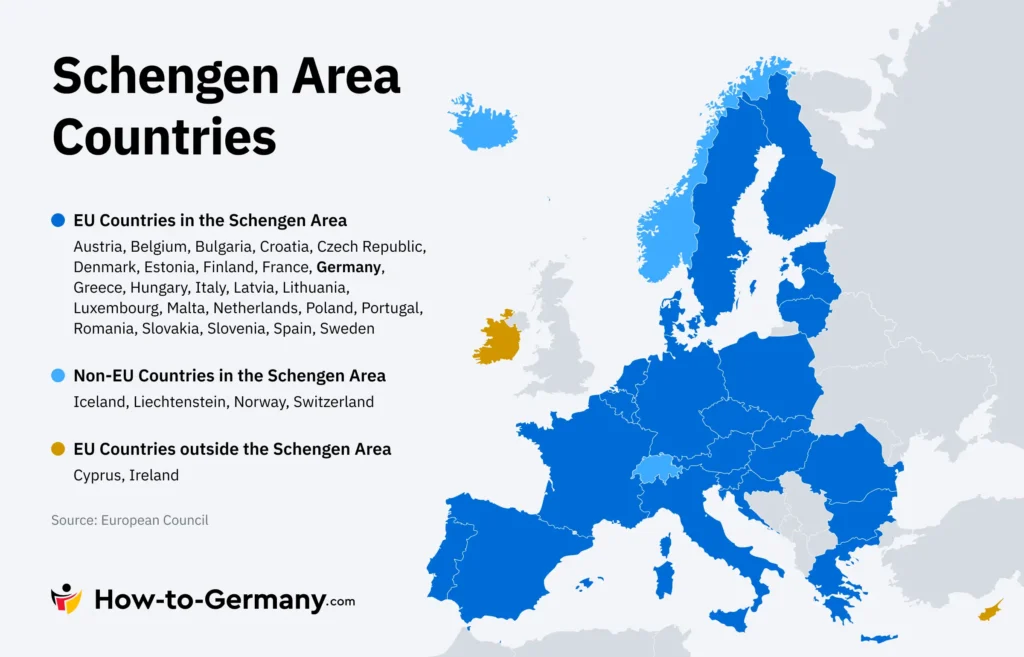
Are the Euro Area and Schengen the Same as the European Union?
No. The European Union, the euro area—also commonly referred to as the Eurozone—and the Schengen Area are closely related, but they do not have identical membership structures.
As of 2026, 21 of the EU’s 27 member states use the euro as their official currency. Bulgaria adopted the euro in 2026, increasing the number of euro-area members to 21.
The Schengen Area, meanwhile, is a separate framework in which internal border controls have largely been abolished.
EU membership alone therefore does not provide a complete answer to what is the European Union or how Europe’s overlapping political and economic structures operate.
According to current EU information, most EU countries participate in the Schengen system, while several countries that are not EU members—including Norway, Switzerland, Iceland, and Liechtenstein—are also part of the Schengen Area.
For this reason, it is important to understand the distinction:
EU member state ≠ euro-area member ≠ Schengen country
These structures overlap, but they should not be treated as identical.
What Is the EU’s Role in Foreign Policy and Security?
In addition to economic integration, the European Union has common mechanisms in the areas of foreign policy and security.
Under the Common Foreign and Security Policy (CFSP), member states can develop common positions on certain international issues, adopt sanctions, and conduct crisis-management activities.
Foreign and security policy also helps illustrate what is the European Union in practice: the EU can coordinate member states in certain areas without becoming a single state with one unified national foreign policy.
However, the European Union and NATO are not the same organization.
NATO is a political and military alliance centered on collective defense, while the European Union is an integration structure with a much broader range of economic, legal, political, and regulatory responsibilities.
We examine NATO’s general structure in our What Is NATO? article and the current security coordination between the two organizations in our NATO-EU Defense Cooperation analysis.
This also connects the EU topic cluster directly with our existing NATO content network.
How Have Türkiye-EU Relations Developed?
Institutional relations between Türkiye and the European integration process have a long history.
In 1963, the Ankara Agreement was signed between Türkiye and the then-European Economic Community. Türkiye submitted its application for full membership on April 14, 1987, and was officially recognized as a candidate country at the Helsinki European Council in December 1999. Accession negotiations began on October 3, 2005.
These historical milestones are documented by both Türkiye’s Directorate for EU Affairs and the Council of the European Union.
The Türkiye-EU Customs Union entered into effect on January 1, 1996. The Customs Union has remained one of the main mechanisms underpinning Türkiye-EU economic relations, particularly in trade in industrial goods.
Türkiye’s relationship with the EU is also important when examining what is the European Union, because enlargement policy and candidate-country relations form an important part of the Union’s external influence.
The Directorate for EU Affairs’ official English page on the history of Türkiye-EU relations provides Türkiye’s official chronology of this process.
The Council of the European Union’s current Türkiye page notes that Türkiye’s accession negotiations have effectively been at a standstill since June 2018. At the same time, relations between Türkiye and the EU extend beyond the accession process and include dialogue and cooperation in areas such as trade, migration, energy, climate, and regional issues.
Türkiye-EU relations therefore represent a much broader economic, political, and institutional framework than accession negotiations alone.
Why Is the European Union Important in International Relations?
The question “what is the European Union?” is also important from the perspective of international relations. One of the main reasons is that the EU combines mechanisms of interstate cooperation with supranational decision-making within a single institutional system.
Member states continue to exercise significant national authority in areas such as foreign policy, defense, and taxation. At the same time, common EU rules play an important role in the single market, trade, competition policy, and a wide range of regulatory areas.
This characteristic makes it difficult to describe the European Union simply as a traditional international organization, while also preventing it from being classified as a single federal state.
For this reason, the EU is widely studied in international relations as one of the most comprehensive examples of regional integration.
The question of what is the European Union is therefore directly connected to wider debates about sovereignty, integration, institutions, and the changing role of states in international politics.
Why Is It Important to Understand the European Union?
The answer to “what is the European Union?” involves much more than knowing that the Union consists of 27 member states.
The European Union is a multi-layered political and economic integration system built around common treaties, seven principal institutions, a shared legal order, a single market, and cooperation across multiple policy areas.
Understanding what is the European Union also requires distinguishing the Union itself from other European arrangements such as the euro area and the Schengen Area.
While the EU has 27 members, the euro area consists of 21 countries and the Schengen Area has a different membership structure. It is therefore important to distinguish between the EU, the euro area, and Schengen when analyzing Europe’s political and economic structures.
For Türkiye, the European Union also holds an important place in foreign relations because of the accession process, the Customs Union, trade relations, and various mechanisms for political dialogue.
In this context, understanding what is the European Union provides an important starting point not only for analyzing European politics, but also for examining Türkiye’s external relations, international economic relations, and processes of regional integration.
Related Articles
NATO-EU Defense Cooperation: Current Trends in European Security
NATO-EU defense cooperation has become increasingly important as Europe responds to the Russia-Ukraine war, higher defense spending, new security threats,…

What Is the UN Security Council? Members, Veto Power, and Functions
The UN Security Council is the United Nations body with primary responsibility for international peace and security. Learn about its…

What Is NATO Article 5? How Collective Defense Works
NATO Article 5 is the foundation of the alliance’s collective defense system. Learn what Article 5 means, how it is…