
What is NATO?
What is NATO? is one of the most frequently researched questions in the fields of international security and foreign policy. From European security and Russia-West relations to Türkiye’s foreign policy and global power competition, the North Atlantic Alliance remains an important actor across many areas of international relations.
NATO stands for the North Atlantic Treaty Organization. Established through the North Atlantic Treaty signed on April 4, 1949, the organization initially brought together 12 countries. Over time, NATO went through several rounds of enlargement and developed into a broad security structure connecting Europe and North America.
Table of Contents
What Is NATO and Why Was It Established?
To understand why NATO was established, it is necessary to examine the international system that emerged after World War II. Following the war, the United States and the Soviet Union became two major centers of power, while European countries faced new security challenges.
Western European countries, together with the United States and Canada, signed the North Atlantic Treaty with the aim of creating a collective defense mechanism against the Soviet Union. The objective was to ensure that a serious threat to the security of one member state would be regarded not only as that country’s concern but as a matter affecting the alliance as a whole.
Following the end of the Cold War, NATO’s areas of activity gradually evolved. Today, alongside traditional military threats, terrorism, cyberattacks, hybrid threats, emerging technologies, and regional crises are also part of the alliance’s security agenda.
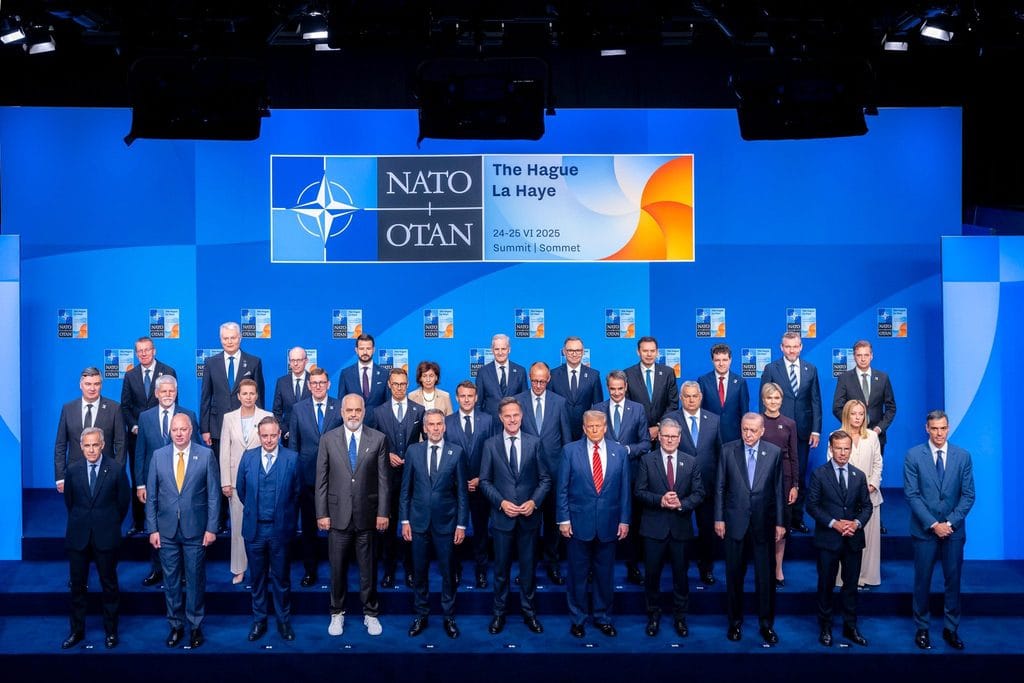
What Is NATO’s Purpose?
The basic answer to the question of what NATO is and what purpose it serves is the protection of the freedom and security of its member countries through political and military means. However, NATO is not simply an organization that conducts military operations.
Member states regularly exchange views on foreign policy, defense, and security issues. For this reason, the alliance also serves as an important platform for political consultation between Europe and North America.
Its main responsibilities can generally be summarized as follows:
- Strengthening the collective defense and deterrence capabilities of member countries,
- Providing political consultation among allies on security issues,
- Contributing to crisis prevention and crisis management,
- Improving interoperability among the military systems of member states,
- Developing joint capabilities against emerging security threats such as terrorism and cyberattacks.
Major political decisions within NATO are generally made through consensus rather than majority voting. This approach is intended to ensure that decisions reflect the collective will of the alliance’s members.
What Is NATO Article 5?
One of the best-known provisions of the North Atlantic Treaty is Article 5. This article forms the foundation of NATO’s collective defense principle.
Under the basic principle, an armed attack against one member country is considered an attack against all allies. In such a situation, the other members are expected to assist the country that has been attacked.
However, this does not mean that every member automatically carries out the same military response. Each state may determine the measures it considers necessary based on its own assessment.
One of the most important functions of this principle is deterrence. By creating the possibility that an attack on one country could result in confrontation with a broader alliance rather than a single state, Article 5 is designed to discourage potential threats.
For more detailed information on collective defense and Article 5, you can visit NATO’s official explanation of Article 5.

Which Countries Are Members of NATO?
The North Atlantic Alliance began its activities in 1949 with 12 founding members. As a result of subsequent rounds of enlargement, the number of member states increased over time. Türkiye was admitted to the organization during one of NATO’s early enlargement periods.
Joining the alliance does not simply mean becoming part of a military partnership. Member states remain in continuous contact on defense planning, security policies, military training, and international developments.
In this respect, NATO is considered one of the most important institutional structures supporting the transatlantic relationship between Europe and North America.
For up-to-date information on NATO membership and the organization’s structure, you can visit NATO’s official website.
When Did Türkiye Join NATO?
Türkiye joined NATO together with Greece on February 18, 1952. It therefore became part of one of the alliance’s first rounds of enlargement only a few years after NATO was established.
Türkiye’s geographical position has been an important factor in its membership. Its proximity to the Balkans, the Black Sea, the Caucasus, the Middle East, and the Eastern Mediterranean contributes to the country’s strategic importance.
From Türkiye’s perspective, the question of what NATO is cannot be evaluated solely in terms of membership in a military alliance. Membership is also significant for Türkiye’s security policies and its institutional relations with Western countries.
Over the years, Türkiye has contributed to various NATO missions, exercises, military structures, and decision-making processes.
Why Is NATO Important Today?
Rapid changes in the international system continue to keep debates about NATO’s role on the global agenda. The Russia-Ukraine war, Europe’s defense capacity, cybersecurity, terrorism, artificial intelligence, and military technologies are among the major issues shaping the alliance’s current security agenda.
Developments in the European security architecture have particularly renewed interest in collective defense among member countries. At the same time, defense spending, burden-sharing among allies, and enlargement policies are frequently discussed in the field of international relations.
For this reason, the answer to what is NATO? today cannot simply be “a military alliance established in 1949.” NATO also operates as an influential international organization in the areas of political consultation, deterrence, defense planning, and transatlantic cooperation.
NATO’s Role in International Relations
The historical development of the North Atlantic Alliance is also important for understanding how the balance of power in the international system has changed over time. Established during the Cold War in response to security concerns centered on the Soviet Union, NATO today addresses a much broader range of security challenges.
In summary, what is NATO? It can be described as an international alliance based on collective defense that promotes political and military cooperation among its member states and plays an important role in the security relationship between Europe and North America. Türkiye has been a member of this structure since 1952 and continues to take part in the alliance’s political and military processes.
More on International Relations
For more content on international relations, foreign policy, global security, international organizations, and current global affairs, you can explore other analyses and blog posts on the Yalova University International Relations Society (YUIT) website. At YUIT, we aim to present academic knowledge in an accessible way and examine international developments from different perspectives.
Related Articles
NATO-EU Defense Cooperation: Current Trends in European Security
NATO-EU defense cooperation has become increasingly important as Europe responds to the Russia-Ukraine war, higher defense spending, new security threats,…

What Is the UN Security Council? Members, Veto Power, and Functions
The UN Security Council is the United Nations body with primary responsibility for international peace and security. Learn about its…

What Is NATO Article 5? How Collective Defense Works
NATO Article 5 is the foundation of the alliance’s collective defense system. Learn what Article 5 means, how it is…