NATO-EU Defense Cooperation: Current Trends in European Security
European security has been reshaped in recent years by debates over defense spending, military capabilities, the defense industry, and transatlantic burden-sharing. In this context, NATO-EU defense cooperation has become one of the key areas of discussion within Europe’s evolving security architecture.
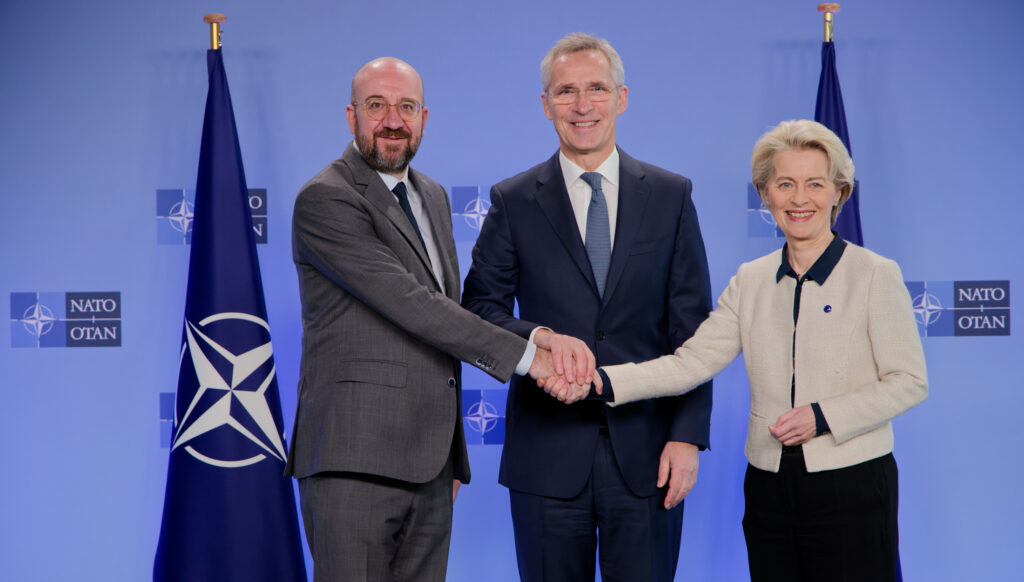
The issue remains high on the international agenda in 2026. NATO Deputy Secretary General Radmila Shekerinska attended the informal meeting of European Union defense ministers during her visit to Ireland on August 31–September 1. According to NATO’s statement published on September 2, 2026, discussions focused on issues including the NATO-EU strategic partnership, support for Ukraine, and strengthening Europe’s defense capabilities.
These developments have once again raised the question of how NATO-EU defense cooperation is evolving in Europe’s changing security environment. Drawing on official NATO and EU documents, this article examines the current cooperation between the two organizations, their distinct areas of responsibility, and the latest trends shaping European security.
For a broader overview of NATO’s founding, purpose, and structure, you can read our What Is NATO? article. For a detailed look at the Alliance’s collective defense mechanism, see What Is NATO Article 5?.
Table of Contents
What Is NATO-EU Defense Cooperation?
NATO-EU defense cooperation refers to the political and practical coordination carried out by the North Atlantic Treaty Organization and the European Union in areas of shared security concern.
One of the main reasons behind NATO-EU defense cooperation is the significant overlap between the memberships of the two organizations. Of the European Union’s 27 member states, 23 are also NATO Allies. The Council of the European Union also highlights this substantial membership overlap on its official EU-NATO cooperation page.
This overlap makes coordination between the two organizations particularly important in areas such as military capabilities, the defense industry, transportation infrastructure, and broader security policy in Europe.
Their cooperation covers a wide range of areas, from cyber and hybrid threats to military mobility, the development of defense capabilities, and the resilience of critical infrastructure. NATO also describes the EU as an important strategic partner on its official page covering relations with the European Union.
Are NATO and the European Union the Same Security Structure?
NATO and the European Union are not the same type of organization.
NATO is a political and military alliance whose primary purpose is to provide collective defense for its member states. Article 5 of the North Atlantic Treaty forms the legal foundation of the Alliance’s collective defense system.
The European Union, by contrast, operates across a much broader range of areas, including economic and political integration, foreign policy, security, the defense industry, crisis management, financing, and regulatory policy.
Their memberships are also not identical. Türkiye, the United Kingdom, and Norway, for example, are NATO members but not members of the European Union. Austria, Ireland, the Republic of Cyprus, and Malta, meanwhile, are EU members but not NATO Allies.
Therefore, NATO-EU defense cooperation does not mean that the two organizations are merging or assuming identical responsibilities. Rather, it refers to the coordination of their different instruments in specific areas of security.
Why Do NATO and the EU Cooperate?
One of the main reasons for close coordination between the two organizations is that a significant number of their member states are the same.
Because the armed forces, military infrastructure, and defense budgets of these countries may be involved in both NATO and EU initiatives, it is important for the systems developed within the two frameworks to remain compatible with one another.
The 11th EU-NATO Progress Report, published on June 18, 2026, assessed cooperation between June 2025 and May 2026. The report noted continued coordination in areas including hybrid threats, resilience, military mobility, air and missile defense, defense production, and standardization.
The fact that the same states must use limited military resources within two different institutional frameworks also makes interoperability and compatible standards particularly important.
For this reason, interoperability, standardization, and avoiding unnecessary duplication of capabilities remain among the central issues in NATO-EU relations.
How Has the Russia-Ukraine War Affected NATO-EU Relations?
Following the Russia-Ukraine War, debates surrounding European security policy, defense spending, and military preparedness have gained greater importance.
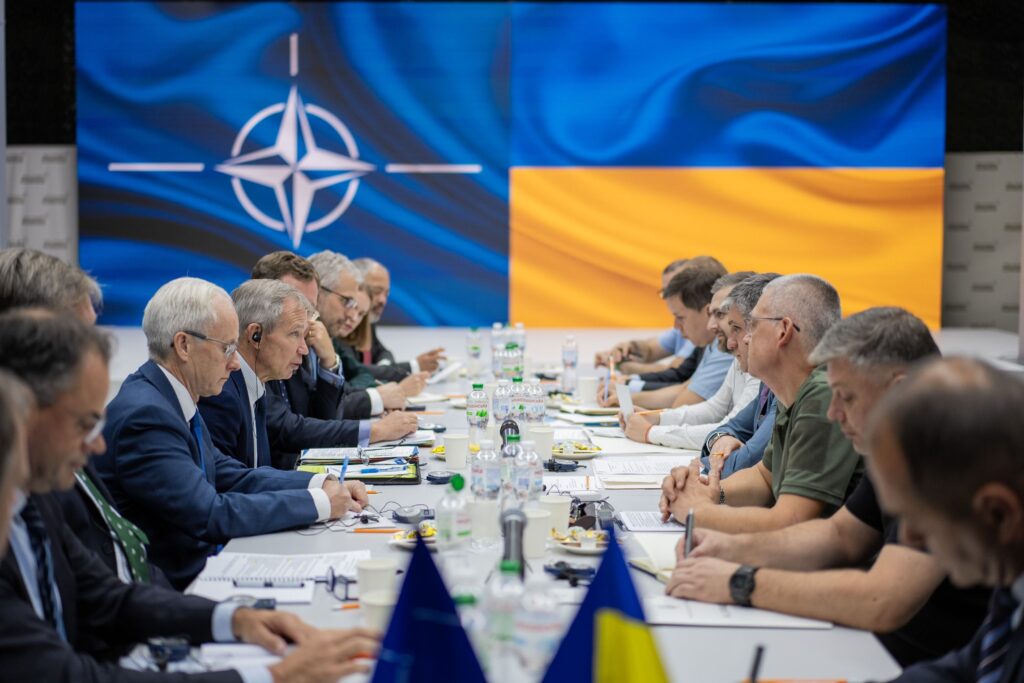
Official NATO and EU documents also identify support for Ukraine as one of the main areas of cooperation between the two organizations. The 11th EU-NATO Progress Report addresses support for Ukraine as an important component of their joint efforts.
Speaking to EU defense ministers on September 1, 2026, NATO Deputy Secretary General Radmila Shekerinska also emphasized Ukraine’s air defense requirements and NATO’s Prioritised Ukraine Requirements List (PURL) mechanism. These statements reflect NATO’s institutional approach to the issue.
The European Union, meanwhile, has instruments extending beyond military assistance, including financing, joint procurement, defense industrial production capacity, and military mobility.
This structure demonstrates that NATO-EU defense cooperation is based not on the two organizations performing identical functions, but on coordinating their different institutional instruments.
What Is Readiness 2030?
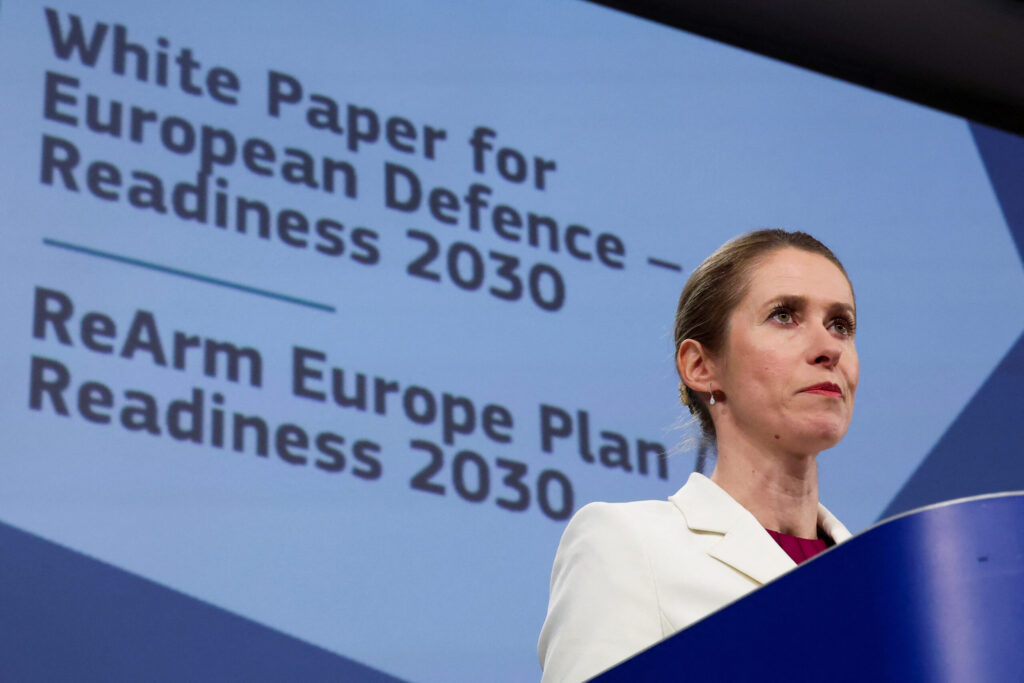
One of the European Union’s major initiatives aimed at strengthening its defense capabilities is the Readiness 2030 framework.
The EU’s European Defence Readiness policy brings together a range of financing and investment instruments designed to improve the defense preparedness of European countries.
The framework is intended to create financial conditions that could enable up to €800 billion in additional defense spending by 2030. The SAFE mechanism included within this framework also provides up to €150 billion in lending capacity to support joint defense procurement.
Readiness 2030 is not focused solely on increasing defense budgets. Strengthening defense industrial production capacity, promoting joint procurement, improving military mobility, and addressing existing capability gaps are also among the initiative’s key components.
The European Commission also emphasizes the importance of improving military mobility in its work on the future of European defense, including efforts to enable troops and military equipment to move more rapidly across Europe.
From this perspective, Readiness 2030 is also creating new coordination requirements for NATO-EU defense cooperation, particularly in the areas of the defense industry and military mobility.
How Is the Relationship Between European Defense and NATO Defined?
The European Union’s efforts to strengthen its defense capabilities have occasionally raised questions about whether Europe is developing a defense system independent of NATO.
However, current NATO and EU documents largely frame the relationship around complementarity, coordination, and interoperability.
NATO’s official approach emphasizes that defense capabilities developed within the EU framework should remain compatible with NATO and that unnecessary duplication of capabilities should be avoided. NATO also addresses the participation of NATO Allies that are not EU members in European defense initiatives as part of the broader relationship between the two organizations.
The EU’s Readiness 2030 approach likewise includes elements aimed at developing European defense in coordination with NATO.
Current official documents therefore tend to frame NATO-EU defense cooperation in terms of coordination and complementarity rather than the development of a European defense system independent of NATO.
Is Europe Taking More Responsibility Within NATO?
The declaration adopted at the 2026 Ankara NATO Summit emphasized the need for European Allies and Canada to assume greater responsibility for the defense of the Alliance.
NATO’s 2026 Ankara Summit Declaration addresses the strengthening of Europe’s defense capabilities within the framework of a stronger transatlantic alliance.
This debate is not limited to the size of defense budgets. Defense production, military capabilities, logistical capacity, air and missile defense, technological capabilities, and the sustainability of armed forces are also important components of the wider burden-sharing debate.
For this reason, NATO-EU defense cooperation is directly connected to discussions over how responsibilities should be distributed within the transatlantic alliance.
What Challenges Does NATO-EU Cooperation Face?
The expansion of cooperation between the two organizations also creates several structural challenges.
One of the most important is that their membership structures are not identical. NATO has stated in its official documents that it considers the broadest possible participation of non-EU NATO Allies in European Union defense initiatives to be important.
A second issue is avoiding unnecessary duplication of capabilities. Directing the same states’ limited defense resources toward incompatible NATO and EU systems could create problems in terms of both cost and operational effectiveness.
For this reason, concepts such as compatibility, complementarity, and interoperability remain central to NATO’s approach to its relationship with the European Union.
European countries also differ in terms of defense budgets, military capabilities, threat perceptions, and national priorities. These differences can affect both the scope of joint projects and the speed at which they are implemented.
How Does NATO-EU Cooperation Affect European Security?
When official documents and developments in 2026 are considered together, NATO-EU defense cooperation appears to be becoming an area that requires increasingly extensive institutional coordination within European security policy.
NATO continues to play the central role in collective defense, military deterrence, operational planning, and interoperability. The European Union, meanwhile, seeks to strengthen the defense capabilities of European countries through instruments such as defense financing, joint procurement, industrial policy, infrastructure, and military mobility.
Official NATO and EU documents generally present these two processes not as competing alternatives, but as efforts intended to remain compatible and complementary.
The extent to which this approach succeeds will depend on factors such as whether defense investments translate into concrete capabilities, whether common standards are maintained, how relations with non-EU NATO Allies are managed, and whether unnecessary institutional and capability duplication can be avoided.
The participation of NATO’s Deputy Secretary General in the EU defense ministers’ meeting held on August 31–September 1, 2026 is also a recent example of the continuing institutional dialogue between the two organizations.
From this perspective, the current trend in NATO-EU defense cooperation is shaped less by the idea of one institution replacing the other and more by the question of how the different capabilities of the two organizations can be coordinated more effectively within European security.
Related Articles
What Is the UN Security Council? Members, Veto Power, and Functions
The UN Security Council is the United Nations body with primary responsibility for international peace and security. Learn about its…

What Is NATO Article 5? How Collective Defense Works
NATO Article 5 is the foundation of the alliance’s collective defense system. Learn what Article 5 means, how it is…